
Omnisend vs ConvertKit 2026 is a comparison between two very different platforms serving two very different worlds. Omnisend dominates ecommerce automation (Shopify, WooCommerce, BigCommerce), while ConvertKit focuses on creators, newsletters, courses, and audience-building.
If you’re running an online store and need product feeds, automation flows that react to customer behavior, and integrated SMS — Omnisend is built for you. If you’re a creator sending broadcasts, selling digital products, and building audience funnels — ConvertKit is the simpler, lightweight option.
This guide breaks down the major differences between the two tools: ecommerce automation vs creator funnels, pricing in 2026, deliverability, templates, segmentation, product-based triggers, and reporting depth. By the end, you’ll know exactly which platform fits your business model — and why mixing them up often leads to lost revenue.
TL;DR — Omnisend vs ConvertKit 2026
- Omnisend is for ecommerce: product feeds, cart recovery, browse triggers, SKU segmentation, SMS.
- ConvertKit is for creators: newsletters, digital products, forms, community building.
- Automation depth: Omnisend wins by a wide margin for ecommerce; ConvertKit wins for simple creator funnels.
- Pricing: similar at low list sizes — but ecommerce ROI is significantly higher with Omnisend.
- Templates: Omnisend has 2× more ecommerce templates; ConvertKit is minimalistic by design.
- Segmentation: Omnisend uses behavioral + purchase data; ConvertKit uses tags & custom fields.
If you sell physical products or run a Shopify/WooCommerce store, Omnisend is the right choice. If you’re a single creator with digital goods, ConvertKit is easier.
Validate revenue in weeks, not months. No dev team required — ready ecommerce flows.
Takes minutes to connect Shopify/Woo. Cancel anytime.
Quick Comparison Table (2026)
| Omnisend | ConvertKit | |
|---|---|---|
| Primary audience | Ecommerce stores | Creators, newsletters |
| Shopify & Woo integration | ✓ native | ✗ none |
| Product feeds | ✓ automatic | ✗ not supported |
| Cart recovery | ✓ full suite | ✗ not supported |
| Automation depth | ✓ advanced | Simple funnels |
| SMS | ✓ native | ✗ unsupported |
| Templates | 60+ ecommerce | Minimal, creator-focused |
| Best for | High-ROI ecommerce | Simple newsletters |
ConvertKit is strong for creators — but it does not support product feeds, ecommerce triggers, or Shopify/Woo integration. These gaps matter for revenue.
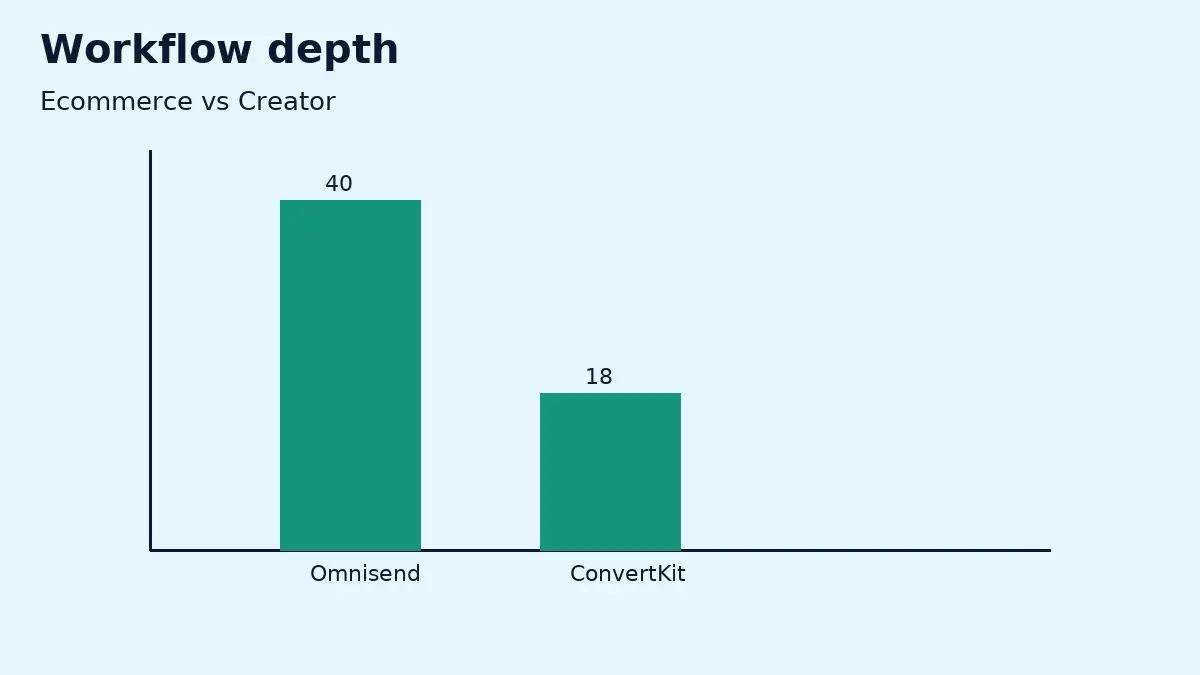
Feature Matrix — Ecommerce vs Creator Workflows (2026)
| Feature | Omnisend | ConvertKit |
|---|---|---|
| Product feed | ✓ auto-sync | ✗ not available |
| Abandoned cart automation | ✓ full | ✗ missing |
| Browse abandonment | ✓ SKU-level triggers | ✗ unsupported |
| Segmentation depth | Behavioral, purchase, prediction | Tags & custom fields only |
| SMS | ✓ native SMS | ✗ not supported |
| Email templates | Ecommerce, seasonal, automation-ready | Minimalistic, creator-oriented |
| Deliverability optimization | ✓ strong for ecommerce volume | Strong for broadcasts |
| Best use-case | Revenue-driven automations | Audience building |
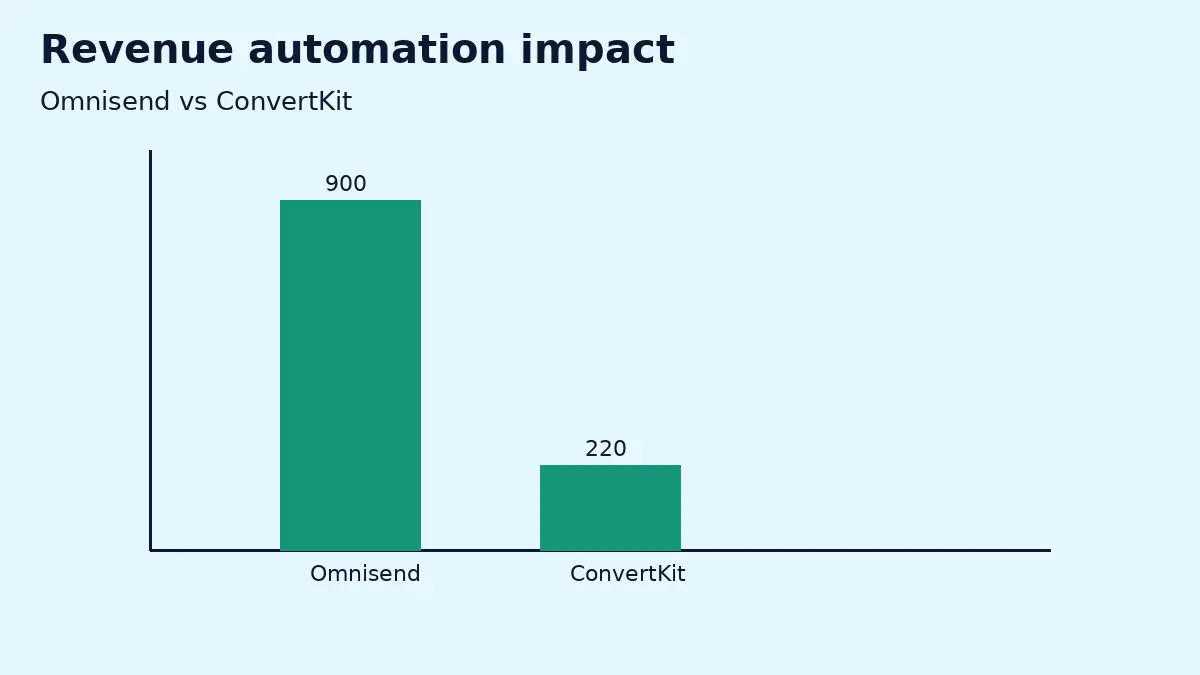
Pricing comparison (2026) — similar cost, different ROI
At first glance, Omnisend and ConvertKit pricing looks almost identical at lower subscriber levels. But the value per subscriber is dramatically different depending on whether you run an ecommerce store or a creator business.
Price snapshot (10,000 subscribers in 2026):
- Omnisend Standard: ~$99/month
- ConvertKit Creator: ~$119/month
The big difference? Omnisend includes all ecommerce features at this tier — product feeds, cart recovery, browse triggers, purchase-based segmentation, and SMS integration.
ConvertKit, on the other hand, focuses on:
- newsletters
- creator forms
- landing pages
- simple ecommerce (digital products only)
For ecommerce brands, these features are not enough to generate meaningful revenue. For creators, ConvertKit feels simple and streamlined.
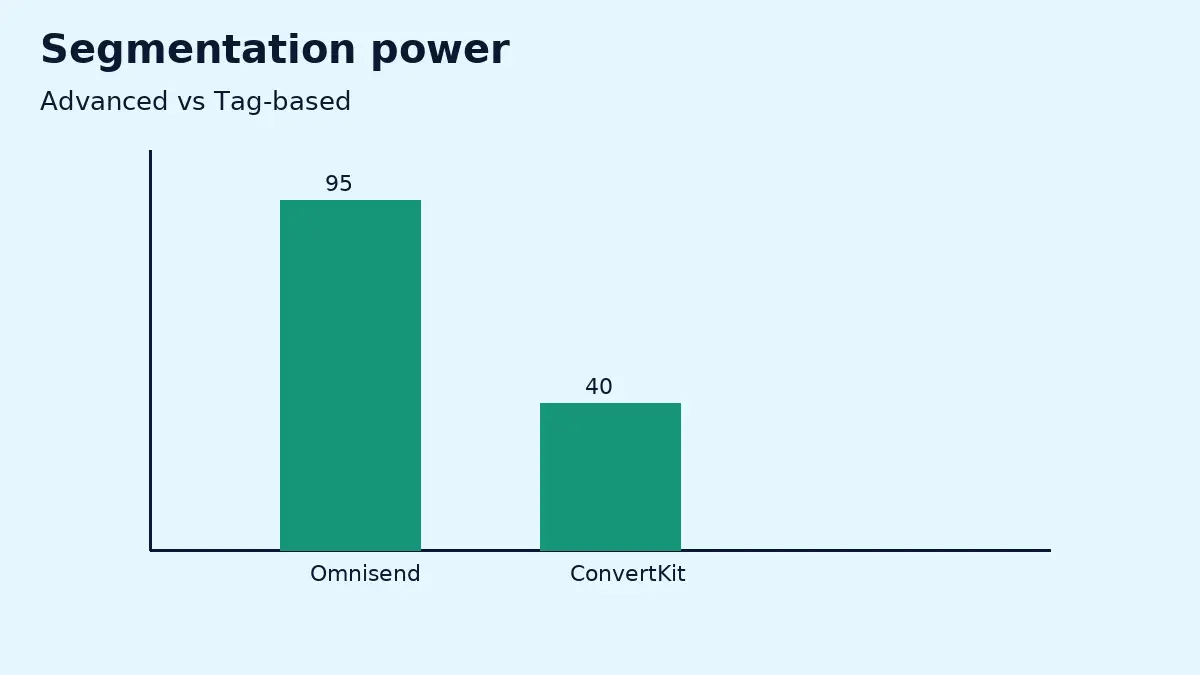
Automation depth: Omnisend vs ConvertKit 2026 – ecommerce vs creator workflows
If you sell physical products, the choice is simple: ConvertKit does not support ecommerce triggers.
Omnisend automation advantages:
- Abandoned cart emails (1–3 step)
- Browse abandonment triggers
- Product-based automation blocks (SKU + category + price)
- Cross-sell & upsell flows
- Post-purchase reviews & replenishment
- Welcome + discount logic
- Predictive churn + purchase likelihood
ConvertKit cannot replicate these — because it lacks the necessary ecommerce data:
- no product feed
- no order sync
- no cart sync
- no SKU events
ConvertKit automation strengths:
- simple welcome funnels
- tag-based segmentation
- broadcast & newsletter sequences
- digital product sales automations
If your business model is creator-first, ConvertKit is friendlier. If it’s ecommerce-first, ConvertKit cannot generate the same ROI as Omnisend.
Templates & editor experience
ConvertKit intentionally keeps templates minimal. Designer-heavy templates are not part of their philosophy.
ConvertKit templates:
- minimal, text-first newsletter layouts
- no product blocks
- no SKU modules
- no ecommerce automation templates
Omnisend, on the other hand, offers:
- 60+ ecommerce templates
- dynamic product blocks
- cross-sell or upsell modules
- cart content blocks
- category-based recommendations
Again — the two tools serve opposite audiences.
Segmentation: behavioral vs tag-based
The biggest gap between Omnisend and ConvertKit in 2026 is how they handle customer segmentation.
Omnisend segmentation includes:
- purchase history
- product categories
- price range
- frequency of purchases
- SKU-based behavior
- page views
- abandoned carts
- predicted churn likelihood
This is what ecommerce needs for revenue.
ConvertKit segmentation includes:
- email tags
- manual segments
- link-click triggers
- form signups
Great for creators — not enough for ecommerce.
Reporting & analytics (2026)
Omnisend reporting:
- revenue attribution
- SKU-level performance
- automation flow breakdown
- cart recovery analytics
- customer lifetime value
- repeat purchase tracking
ConvertKit reporting:
- email opens
- email clicks
- subscriber growth
- broadcast performance
Omnisend tracks revenue. ConvertKit tracks attention, both for Omnisend vs ConvertKit 2026.
For ecommerce, attention is not enough — you need revenue insights.
Who should choose Omnisend vs ConvertKit 2026?
Choose Omnisend if you:
- run a Shopify, WooCommerce, or BigCommerce store
- need abandoned cart recovery
- want SMS + email automation from one system
- need product feeds or dynamic product blocks
- want behavioral segmentation
Choose ConvertKit if you:
- run a creator business
- sell digital products or courses
- publish regular newsletters
- want a simple, minimalist platform
FAQ: Omnisend vs ConvertKit 2026
Does ConvertKit support Shopify or WooCommerce?
No — ConvertKit does not offer native ecommerce store integrations.
Which tool has stronger automations?
Omnisend’s automations are significantly more advanced for ecommerce, with product-based triggers and SMS.
Which tool is better for creators?
ConvertKit is easier for newsletters, forms, and digital products.
Which platform scales better for revenue?
Omnisend — because it supports ecommerce data, product feeds, and automated sales flows.
Can ConvertKit replace Omnisend for ecommerce?
No — ConvertKit lacks cart recovery, product feeds, and purchase-based automation logic.
Final Verdict — Which platform wins in 2026?
For ecommerce, Omnisend wins by a landslide. It supports Shopify, WooCommerce, and all key ecommerce automation triggers — which ConvertKit simply does not offer.
For creators, ConvertKit remains the simpler tool. But its limitations make it unsuitable for revenue-driven ecommerce operations.
If your business sells physical products — the right choice is Omnisend. If you run a creator-first brand — ConvertKit will feel more lightweight.
Validate revenue in weeks, not months. No dev team required — ready ecommerce flows.
Takes minutes to connect Shopify/Woo. Cancel anytime.