
Abandoned Cart Flow: 7 Proven, Effortless Steps to Recover “Almost-Buyers” Fast (and Feel Good Doing It)
This is a comic-style walkthrough of a high-performing abandoned cart flow: what triggers it, what each message says, and how to measure the recovered revenue — without chasing people manually.
Official references: Abandoned cart automation, how Omnisend tracks carts, cart & checkout workflow rules.
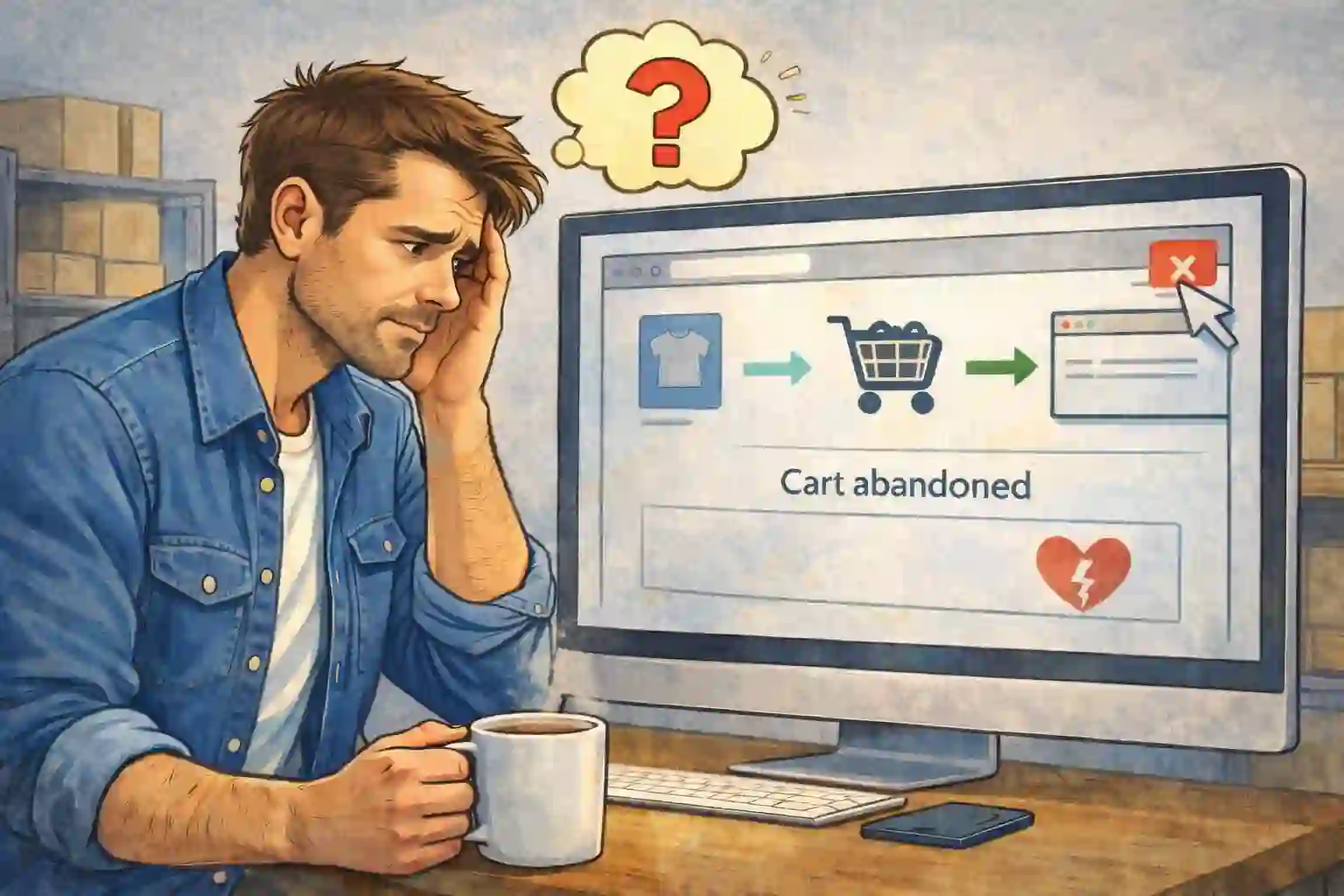
They were inches away — then life happened.
Cart abandonment usually isn’t rejection. It’s interruption: a call, a distraction, a second thought, a shipping question that didn’t get answered quickly enough.
The point of an abandoned cart flow is simple: return the buyer to the exact moment they paused, with a clean path back to checkout.
- Assume good intent: the cart is a buying signal, not a “maybe.”
- Assume friction: uncertainty is what blocks the purchase.
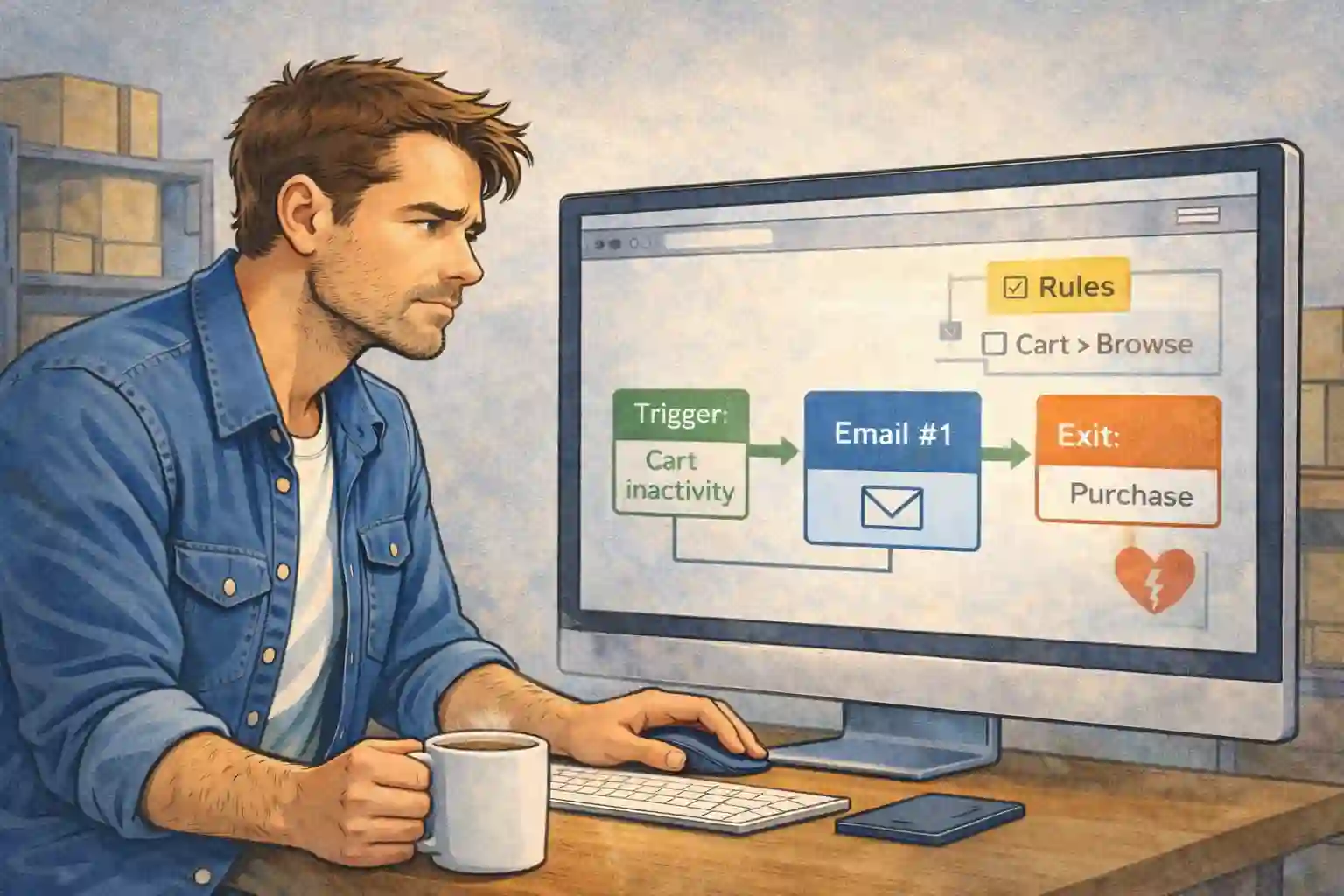
Define “abandoned” with one rule: inactivity.
Great cart recovery starts with timing. Too early feels pushy. Too late loses urgency. Your trigger is not “they left” — it’s “they stopped.”
In Omnisend, you set the abandonment point using inactivity time, plus exit conditions so contacts don’t get hit by multiple automations at once.
- Set inactivity window that matches your buying cycle (fast vs. considered purchase).
- Add exit conditions: once they purchase, they immediately leave the sequence.
- Avoid overlap: cart vs. checkout vs. browse sequences need clear priorities.
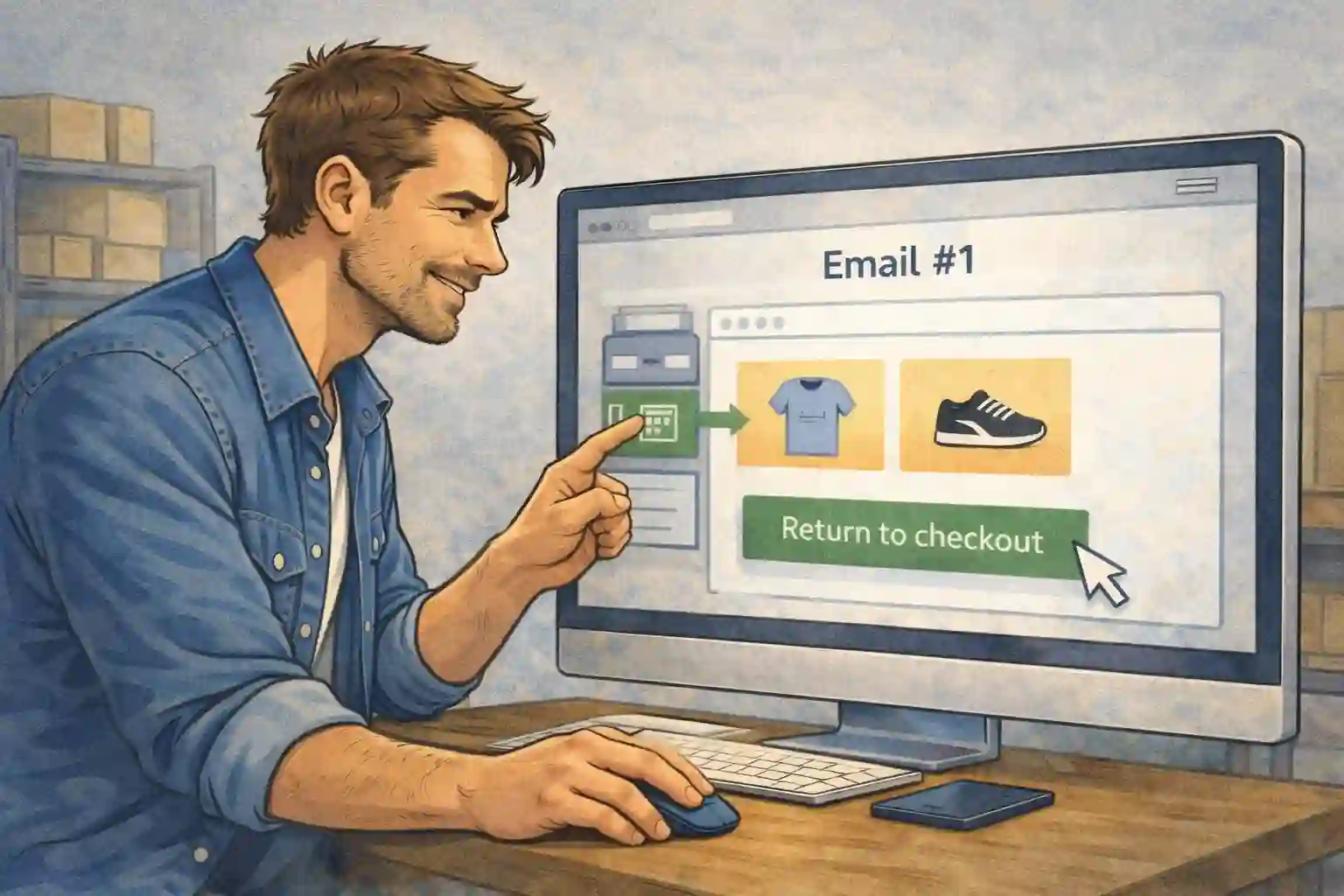

Message #1: “You left something behind.” One button.
The first message should feel helpful, not salesy. Your job is to restore continuity: show the items, show the path, remove the “where was I?” moment.
- Use cart product blocks (auto-filled items + prices).
- One primary CTA: “Return to checkout.”
- Keep the copy short: clarity beats creativity here.
Message #2: remove the friction you already know exists.
The second message is where you win the “but what about…” objections: shipping costs, delivery time, returns, warranty, trust, payment options.
This is where an abandoned cart flow becomes a conversion system — because you aren’t repeating the reminder; you’re clearing the path.
- Answer top 3 questions (shipping, returns, delivery timeline).
- Add 2–3 trust lines (support, reviews, secure payments).
- Link to a clean policy/FAQ page if you have it.
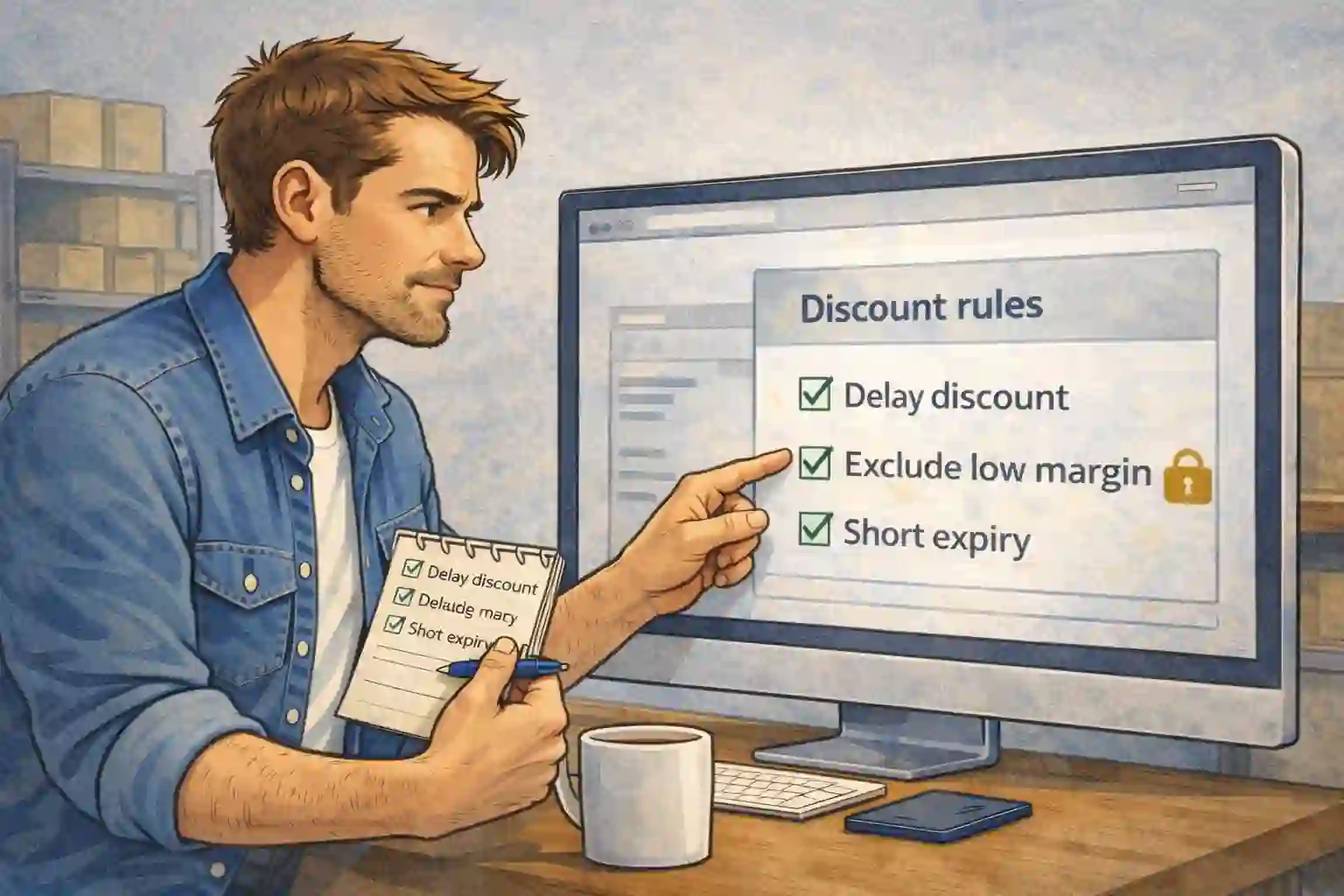
Don’t train customers to wait for discounts.
The smartest cart recovery uses incentives only when needed. If you discount every cart, you don’t “recover” — you give away margin to buyers who would have purchased anyway.
Build rules: who gets a coupon, when it appears, and when it never appears. That’s how an abandoned cart flow stays profitable.
- Only offer a coupon on message #2 or #3 (not immediately).
- Exclude discounted items / low-margin categories.
- Use expiry to create gentle urgency — not panic.
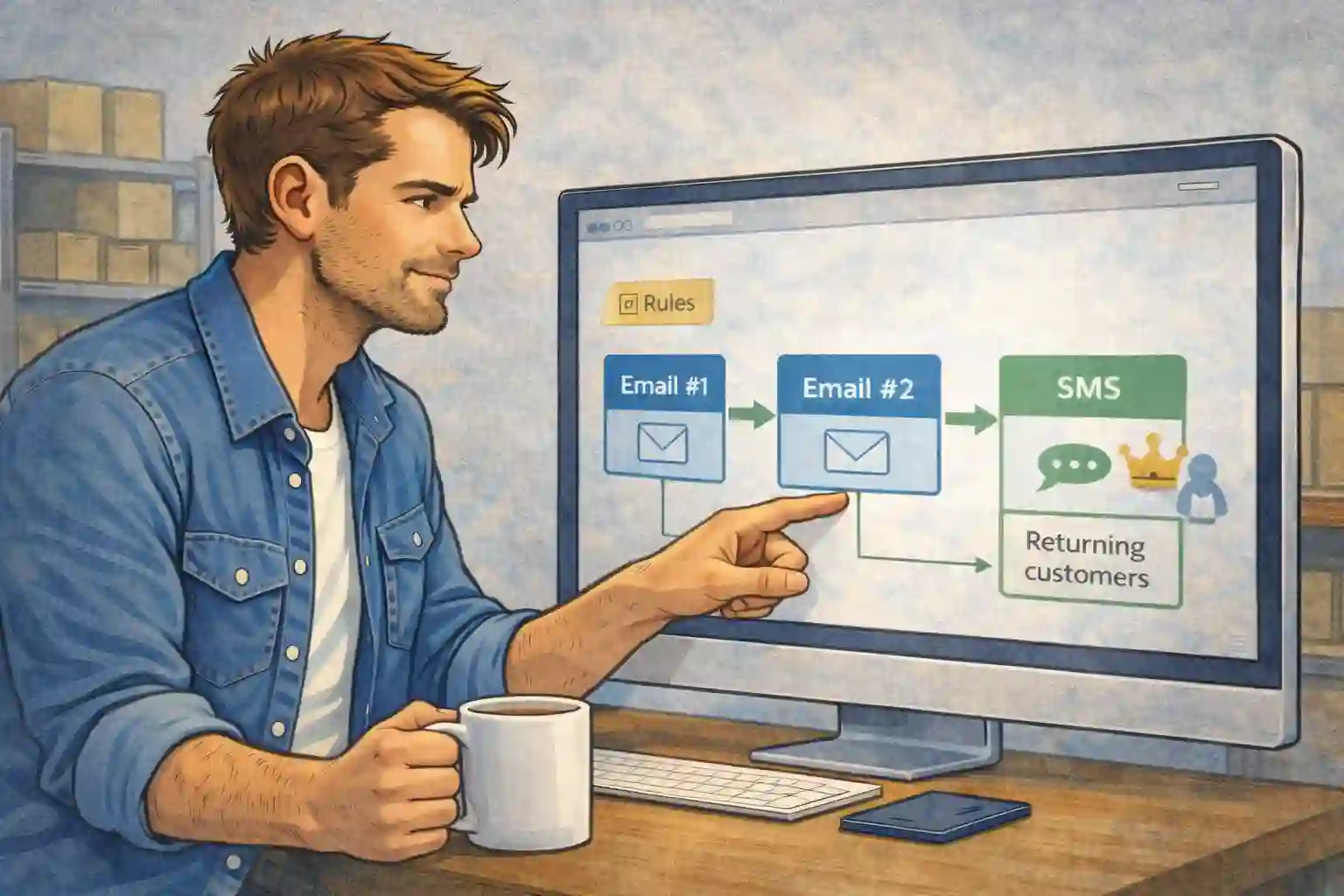
Email first. Then add SMS/push where it actually helps.
Multi-channel works when it’s selective. Email is your base channel. SMS and push are the “tap on the shoulder” for returning customers who already trust you.
Segment it: first-time abandoners often can’t receive SMS (no phone captured yet), while repeat buyers can — which makes SMS a multiplier, not a dependency.
- Use SMS for returning customers with known phone numbers.
- Keep SMS short: one sentence + one link.
- Use push for quick reminders (especially during promo periods).
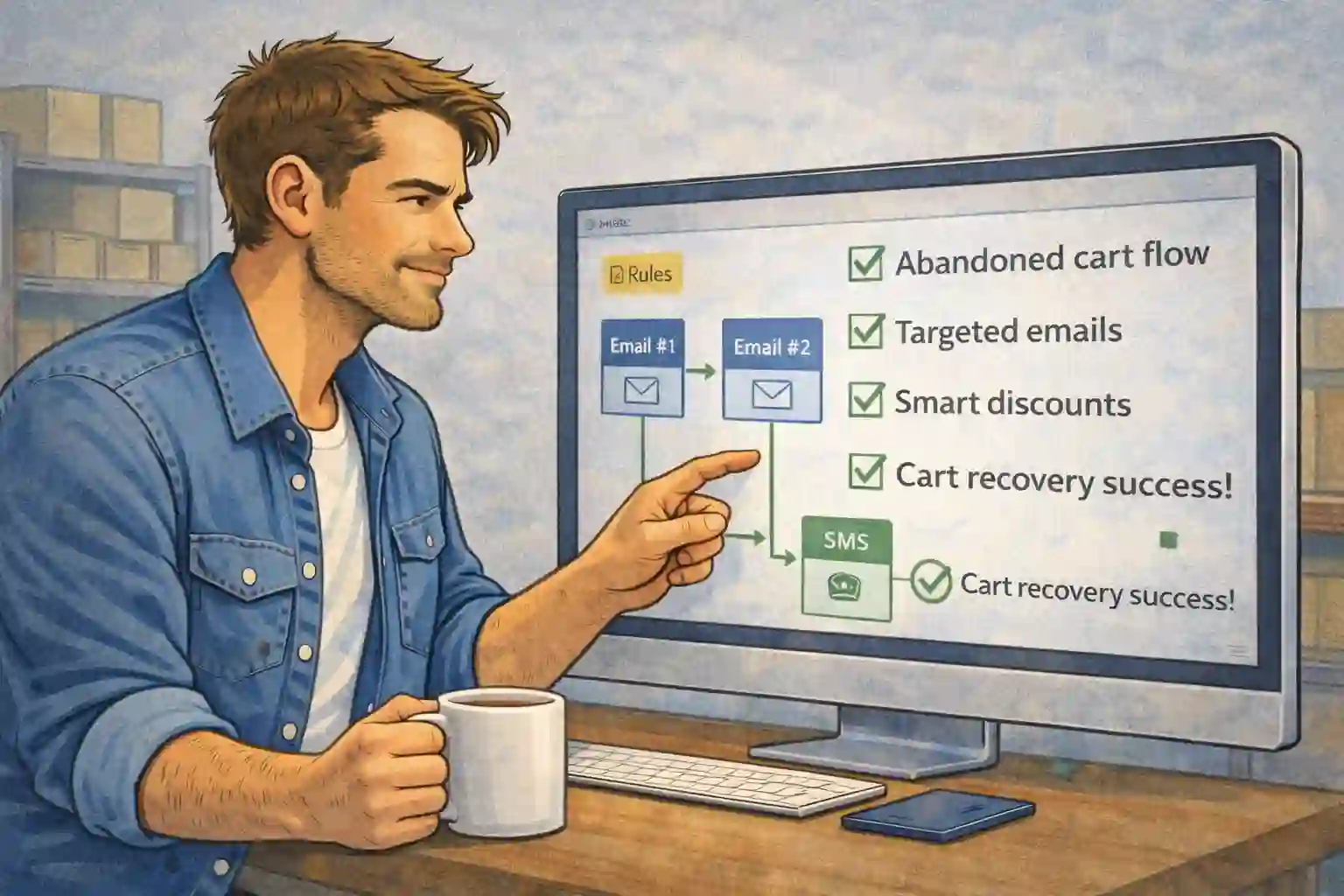
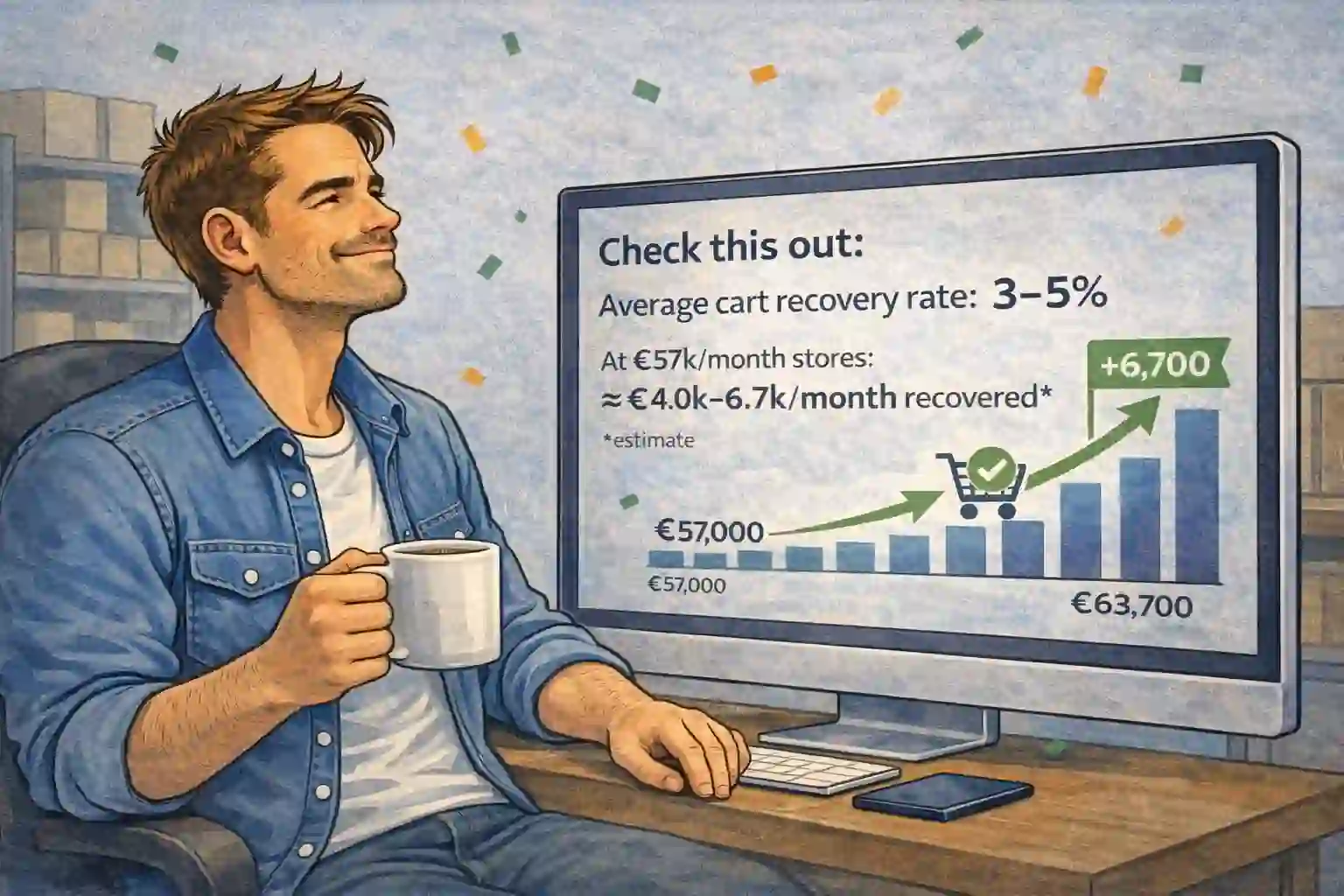
Track recovery like a product, not a “campaign.”
If you want top results, you need a feedback loop. Watch the three numbers that matter: open rate, click rate, and recovered revenue (not just “sent”).
Once the dashboard is clean, optimization becomes obvious: subject line, offer timing, friction copy, or the checkout experience itself.
- Measure recovered revenue per message (Email #1 vs. #2 vs. #3).
- Compare segments (new vs. returning customers).
- Iterate monthly: small changes compound fast.
Want us to build your abandoned cart flow for you?
If you’d rather skip the setup, rules, and QA — we can build this directly inside your Omnisend account. You’ll get a clean cart trigger, a 2–3 message sequence, optional SMS/push, and the measurement framework so you can see recovered revenue without guesswork.
We keep it practical: your product blocks, your brand tone, your shipping/returns reality — and rules that protect margin. Then we test end-to-end (cart → email → click → checkout) and stabilize the sequence for 30 days.
Fast next step: send your store link + your average order value — we’ll reply with the exact timing + message logic we’d use.
Start Free With Omnisend — and recover carts automatically
The abandoned cart flow you just saw works quietly in the background — bringing “almost-buyers” back and turning leaks into recovered revenue.
Start Free With Omnisend →