
Lead Nurturing automation for Ecommerce: Turn Subscribers Into Buyers (Omnisend)
Lead nurturing automation for ecommerce is what happens between signup and first purchase—when most stores lose people. This LP gives you a practical framework (segments → timing → offers) and the exact next steps to implement it in Omnisend.
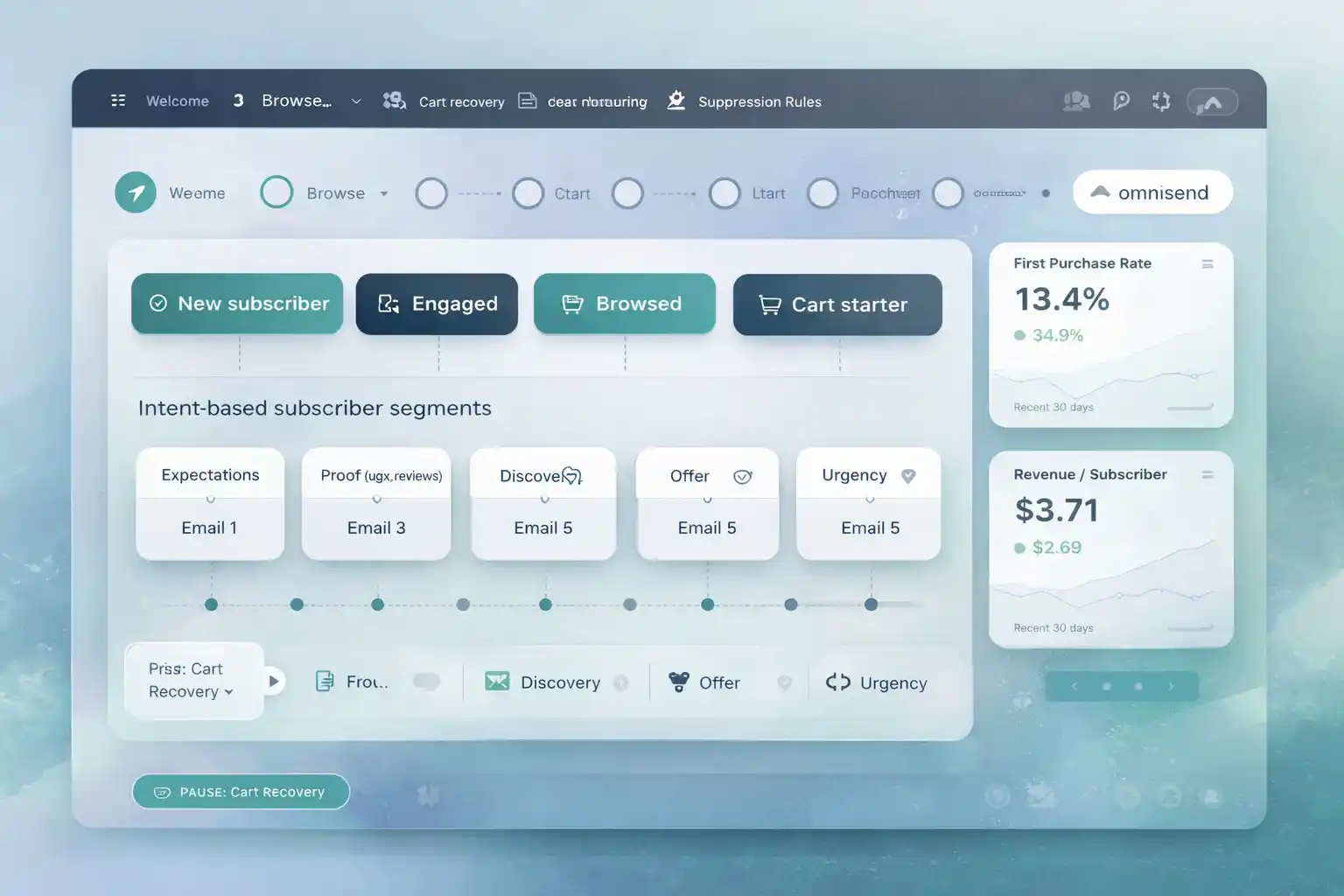
What lead nurturing automation for ecommerce is (in one sentence)
Lead nurturing automation for ecommerce is a timed sequence of automated messages that turns a new subscriber into a buyer by matching intent (browse/cart) and trust (proof/education) to the right offer.
If you want the “big picture” lifecycle hub, see Customer journey automation. If you want the segmentation + lifecycle backbone, see CRM-style email automation.
This page focuses on the part most stores underbuild: the first 7–14 days after signup—when your list is warm but not ready.
Launch a welcome series that adapts to behavior: if they browse, change the message; if they add to cart, switch to conversion; if they don’t engage, slow down and protect deliverability.
Deliverability reference (external, dofollow): Google Workspace Admin Help (SPF/DKIM/DMARC)
The 5-part nurturing framework (simple, repeatable)
Use this order to build lead nurturing for ecommerce without “random best practices”.
Signup → browse → cart → purchase or inactivity.
New, high-intent, price-sensitive, product affinity.
Trust → proof → education → offer → urgency.
Consent, frequency caps, suppression, cooldowns.
First purchase rate, revenue/recipient, complaints.
Nurture map: from signup to first purchase (without spamming)
Lead nurturing for ecommerce works best when you route people by behavior: engaged gets faster conversion, unengaged gets slower trust-building.
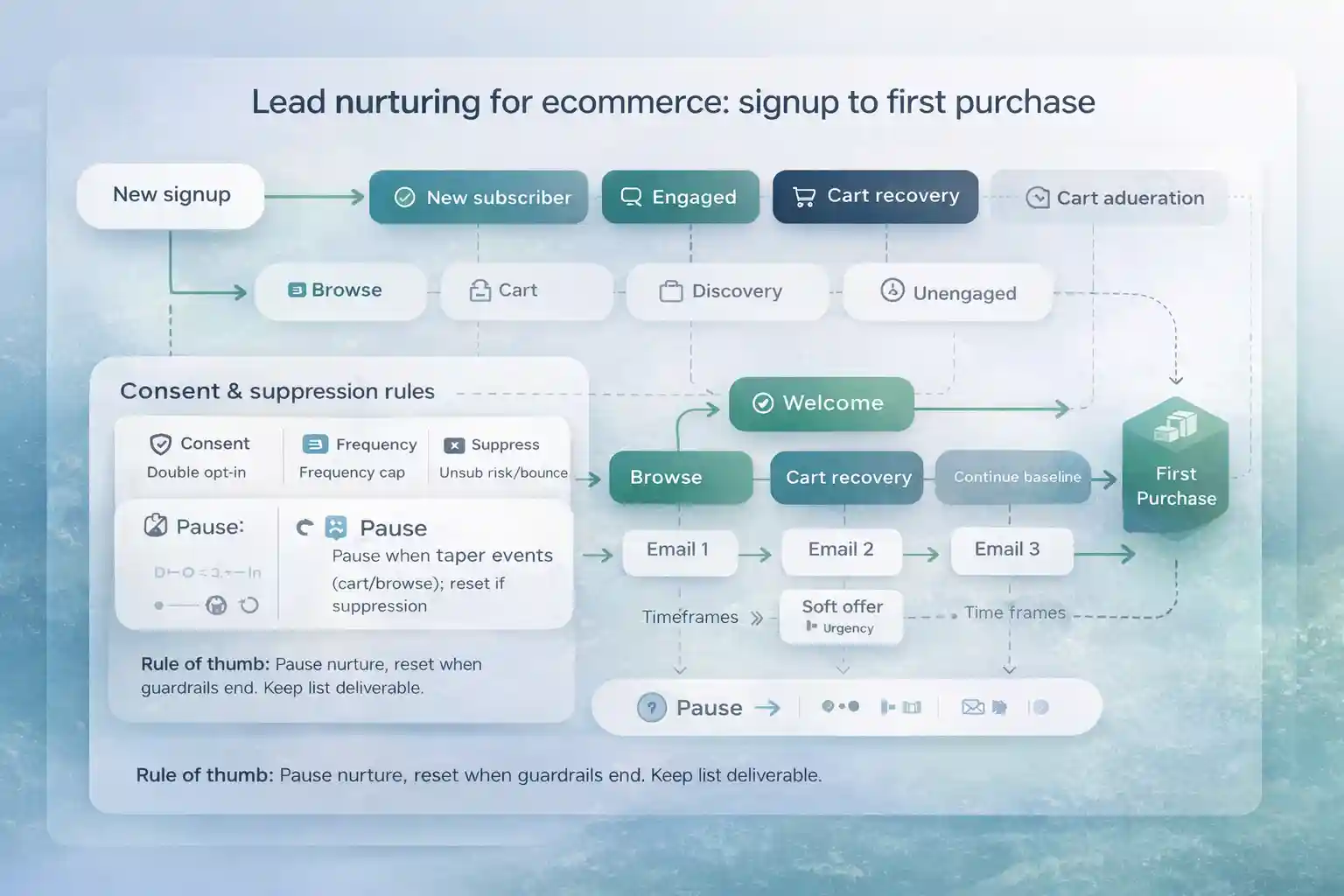
Rule: if a subscriber enters a conversion flow (cart/browse), pause the generic nurture emails.
3 nurturing flows that move subscribers to checkout
These are the minimum viable set. Once they’re live, you can add deeper segmentation without breaking deliverability.
Welcome series (trust → proof → offer)
Start with clarity and credibility, then move to product discovery and a soft offer. Behavior should change timing.
Open welcome templateDouble opt-in + consent (EU-safe)
Cleaner list → better inbox placement → nurturing works. If you’re EU-heavy, this is non-negotiable.
Implement consentWinback (nurture the “almost buyers”)
Re-engage people who didn’t buy: use value, not discounts first. Add suppression so you don’t annoy active buyers.
Implement winbackImplement Lead Nurturing automation in Omnisend
If you want the shortest path from “idea” to “live”, use these three pages as your build order. Disclosure: some links are affiliate links (no extra cost to you).
Your build order (recommended)
1) Consent hygiene → 2) Welcome nurture → 3) Winback recovery. Keep frequency caps and pause nurture when cart/browse flows trigger.
Prefer the larger hub view? See customer journey automation.
Nurture Planner: what to send (and how fast)
Answer 4 inputs and get a recommended nurture pacing + next step pages. This keeps lead nurturing for ecommerce ROI-first.
Your recommended nurture pacing
- Day 0: Welcome + expectation setting (trust)
- Day 1–2: Product discovery + proof (reviews, UGC)
- Day 3–5: Soft offer + urgency (only if engaged)
Nurturing vs blasting vs lifecycle automation
This table is about the concept. Lead nurturing automation for ecommerce is the bridge between “newsletter mode” and full lifecycle automation.
| Approach | Best for | What happens | Risk |
|---|---|---|---|
| Blasts | Short promos, simple lists | Everyone gets the same message regardless of intent | Higher unsub/complaints over time |
| Lead nurturing | Converting new subscribers | Timed trust → proof → offer, routed by behavior | Needs guardrails (pause, caps, consent) |
| Lifecycle automation | Repeat revenue system | Flows across Acquire → Convert → Retain → Winback | Requires ongoing iteration + hygiene |
Next: connect this nurturing layer to customer journey automation.
Pros & Cons of lead nurturing for ecommerce
Pros
- Higher first purchase rate without constant manual work
- Better deliverability than promo-heavy blasting (when consent is clean)
- Creates a “learning system” (behavior → message → metric)
- Builds trust before discounting (protects margin)
Cons
- Requires discipline (pause rules, caps, suppression)
- Needs clean events (browse/cart) for best personalization
- Too many segments can create “segment bloat”
- Must be iterated (timing and content) to stay effective
4 trends shaping nurturing in ecommerce
Keep these in mind when you build your sequences.
Clean opt-in and hygiene matter more than clever copy.
Browse/cart signals decide the next message, not a fixed calendar.
UGC, reviews, and guarantees convert earlier than coupon spam.
Frequency caps and suppression are “profit protectors”.
FAQ: lead nurturing for ecommerce
How long should a welcome nurture sequence be?
What’s the #1 mistake in lead nurturing for ecommerce?
Where do I go next from this page?
Launch your nurture system (then scale to lifecycle)
Primary = internal framework hub. Secondary = Omnisend trial for people who are ready now.