Omnisend free plan vs paid 2025: which one fits early-stage stores
Omnisend free plan vs paid 2025 is the exact comparison most early-stage Shopify and WooCommerce teams need before they start sending. When your brand is pre–product–market fit or just getting consistent orders, the free tier looks attractive—but you also don’t want to hit a ceiling in week three. This guide explains what the free plan really includes, where paid tiers start winning, and how to stage your upgrade so you validate revenue first and only then commit to monthly spend. You’ll see the precise differences in automation, audience size, SMS usage, templates, analytics, and support—plus realistic scenarios for stores at 0–1k, 5k–15k, and 20k+ contacts.
We’ll stay 100% BOFU: you’ll get a quick comparison, a deep features matrix, recommended “order of operations”, and ROI checkpoints you can run weekly. To keep it practical, we also include references (pricing, help center) and three visuals that make cost and performance obvious.
TL;DR verdict
If you’re an early-stage store, start on the Omnisend Free plan to validate core automations (welcome, browse, cart, post-purchase) and revenue attribution. Upgrade to Standard when you outgrow contact/send limits or need more robust SMS and segmentation. Move to Pro once you consistently rely on advanced analytics, higher volumes, and more granular split testing. The key is to go live fast on free, prove revenue per flow, then scale only when the numbers say so.
Rule of thumb: if automations generate 5–10% of total revenue for two consecutive weeks and you’re bumping into send/feature limits, it’s time to upgrade.
Omnisend free plan vs paid 2025: quick overview
The purpose of the Omnisend free plan vs paid 2025 decision is to minimise risk while maximising speed to revenue. Free removes the subscription cost so you can switch on revenue-ready ecommerce flows in hours. Paid adds headroom—bigger sends, deeper segmentation, advanced testing, and better multichannel orchestration—so you can scale once revenue is proven.
Omnisend free plan vs paid 2025 — quick comparison
Heads-up: pricing pages change. Use this comparison to frame your decision, then confirm live pricing and SMS rates before you upgrade.
What each plan includes (Omnisend free plan vs paid 2025 features)
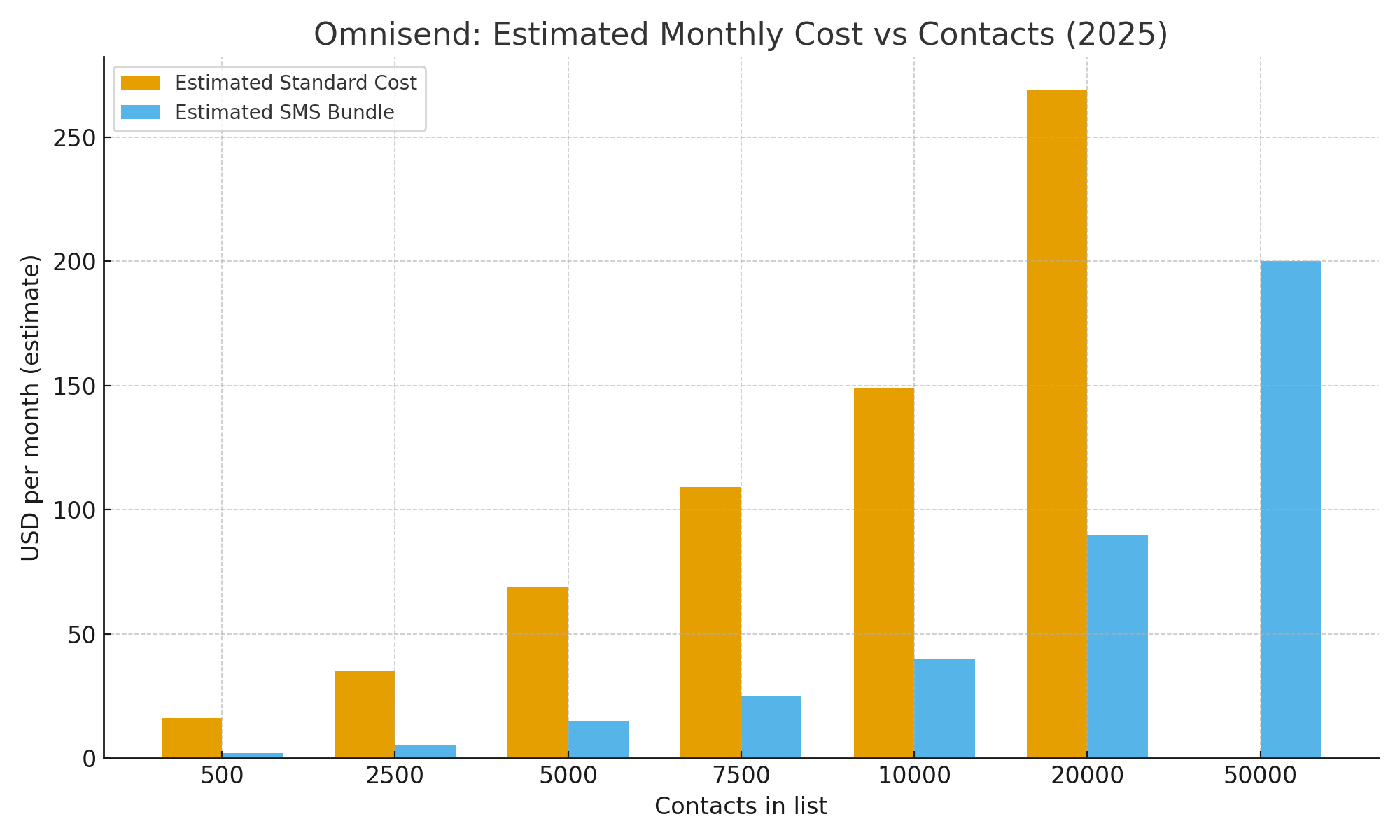
Omnisend free plan vs paid 2025: pricing & real cost
Omnisend’s entry tier lets you ship the most important automations with zero risk. As your contact list grows and automations start contributing steady revenue, moving to a paid plan unlocks larger sends, stronger segmentation, and better SMS orchestration. Always verify live pricing and SMS rates before deciding:
References (nofollow):
Omnisend pricing,
Omnisend Help Center,
Omnisend on Shopify App Store.
Omnisend free plan vs paid 2025: order of operations
Why early-stage stores start on Free (Omnisend free plan vs paid 2025)
- Connect Shopify/Woo → enable Welcome, Browse, Cart, Post-purchase, Win-back.
- Use product feed and recommendations blocks to ship designs fast.
- Keep SMS to high-intent events (cart saved, shipping). Avoid blasting SMS campaigns.
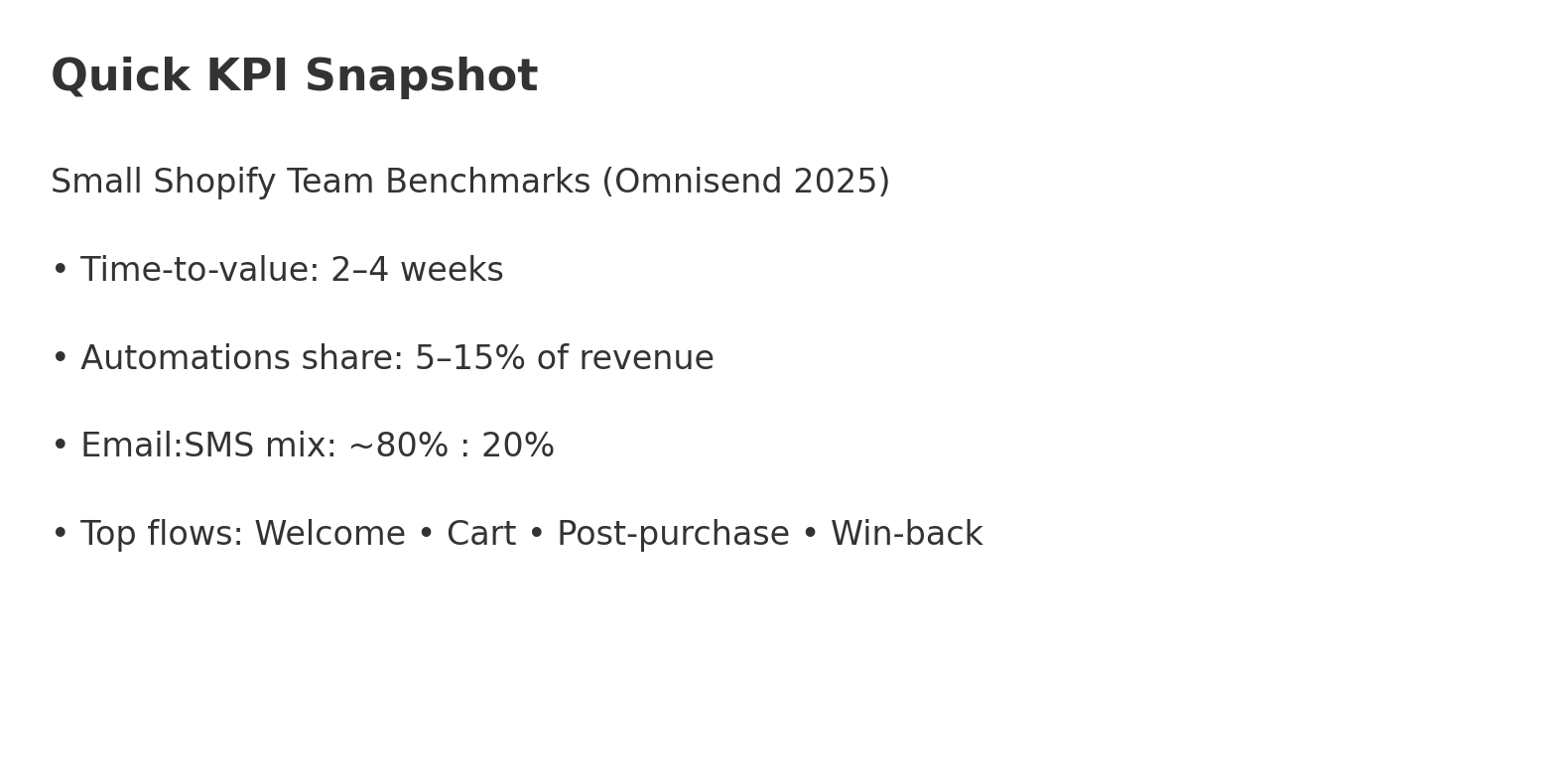
- KPI: first automation revenue within 72h; flow share 3–7% by end of week two.
When to upgrade: data threshold for Omnisend free plan vs paid 2025
- Two consecutive weeks with ≥5–10% of revenue from automations.
- Regularly hitting send/contact limits or needing deeper segmentation.
- Desire to run A/B splits and controlled multichannel journeys.
Deliverability & safe scaling
- Authenticate SPF/DKIM/DMARC on a dedicated sender subdomain from day one.
- Warm gradually: send first to engaged segments; avoid sudden volume jumps.
- Sunset policy: suppress no-open/no-click contacts after 90–120 days; clean monthly.
- SMS: keep it transactional or high-intent; avoid daily promotional SMS at small lists.
Copy templates you can ship today
Welcome #1 — “Start with our best sellers”
- Subject: “Welcome! Here’s 10% off your first order”
- Body: brand promise, 3 benefits, product grid, single CTA
- PS: shipping/returns link; social proof
Cart #2 — “We saved your cart”
- Subject: “Your items are almost gone”
- Body: dynamic product list, guarantee, deadline coupon
- Optional SMS: “Your cart’s ready → {short link}”
Post-purchase #1 — “Make it last longer”
- Subject: “Pro tips for your new item + a little thank you”
- Body: care tips, cross-sell block, support links
Win-back #2 — “We miss you”
- Subject: “A little nudge to come back”
- Body: value reminder → limited-time incentive → urgency
ROI modeling: when paid beats free
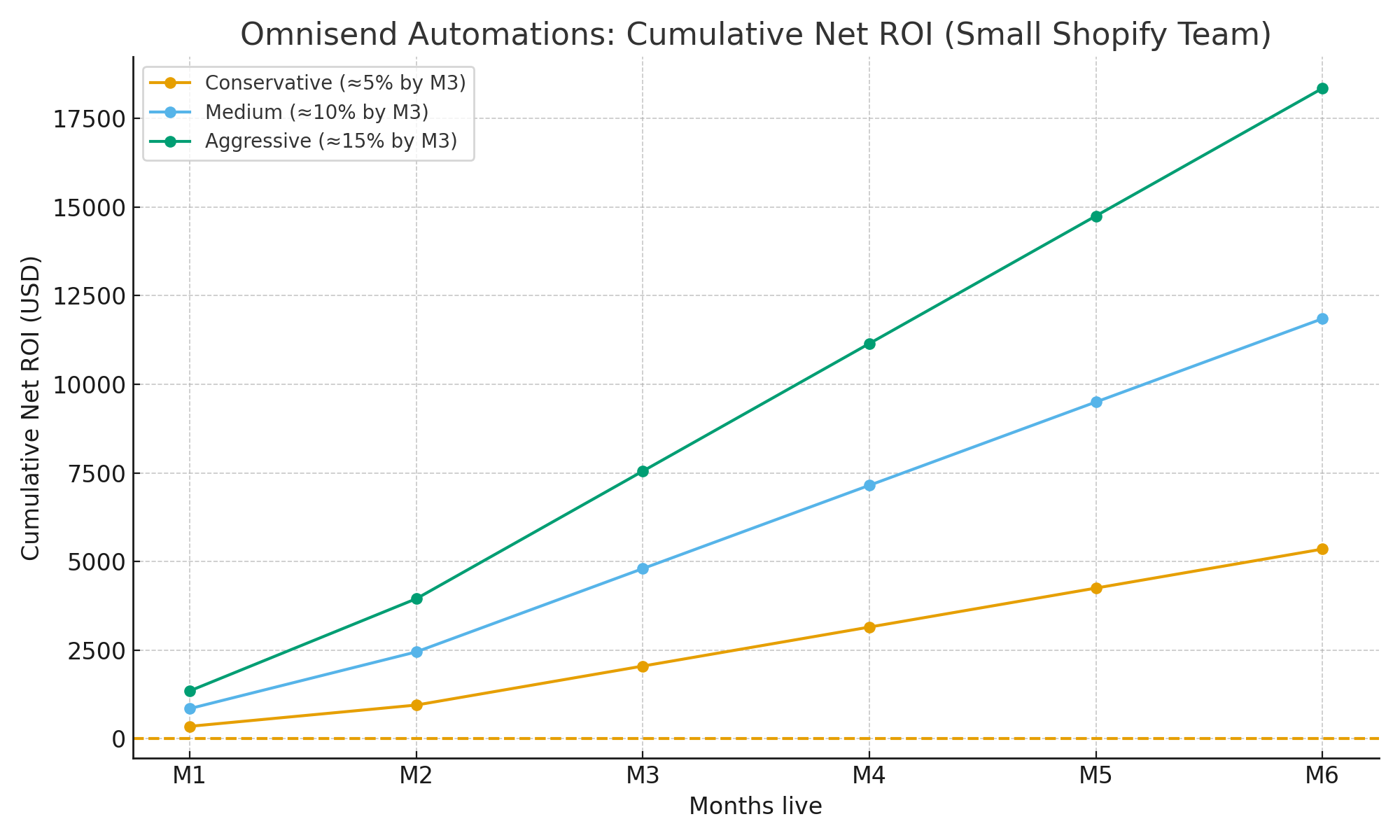
If your automations are already producing 5–10% of monthly revenue and you’re constrained by sends or segmentation, moving to paid usually increases incremental revenue faster than cost. The upgrade pays for itself if the incremental automation revenue is ≥ plan delta + SMS deltas. Keep a simple weekly model and make the decision with data, not hope.
Omnisend free plan vs paid 2025: who should pick which?
Omnisend free plan vs paid 2025 isn’t about “cheap vs expensive”; it’s about the right stage for the right capabilities. The free tier removes risk so small Shopify/WooCommerce teams can launch revenue-ready flows on day one. Paid tiers add headroom: more sends, deeper segmentation, stronger SMS orchestration, and experiments. Below are clear scenarios.
Scenario A — New Shopify brand (0–1k contacts)
You’re still validating product/offer. With the Omnisend free plan vs paid 2025 decision, free wins. Turn on Welcome, Cart, Browse, and Post-purchase. Use the product feed and recommendations blocks so the first email is live in under an hour. Add one transactional SMS in Cart only. Goal: confirm that automations drive 3–7% of revenue within two weeks.
Scenario B — Early growth (5k–12k contacts)
Here the Omnisend free plan vs paid 2025 discussion tilts toward Standard. You’ll hit send limits and want smarter audience logic: VIP, at-risk, replenishment. Light A/B splits on subject/timing typically add 5–12% lift. If your flow share of revenue stays ≥8–15% for two consecutive weeks, you’re past validation—upgrade pays for itself.
Scenario C — Seasonality & spikes
For BFCM or drops, the Omnisend free plan vs paid 2025 answer is paid for at least one billing cycle. You need predictable volume, multi-step email+SMS, and throttling to maintain deliverability. The extra segmentation and testing usually recoups the plan difference in a few days of sales.
Scenario D — SKU-rich catalog
With many SKUs, the Omnisend free plan vs paid 2025 evaluation favors paid earlier: the recommendation logic and product-level insights help you personalize quickly. Add browse lane splits for category affinity and a replenishment branch based on order frequency.
Omnisend free plan vs paid 2025: KPIs that trigger the upgrade
- Flow revenue share: two weeks in a row at ≥5–10% of total revenue.
- List growth vs. send ceiling: frequent warnings about send/contact limits.
- SMS economics: clear ROI on transactional SMS; promotional SMS used sparingly.
- Deliverability: stable inbox rate after warm-up; clean monthly hygiene.
When these thresholds are met, the Omnisend free plan vs paid 2025 choice becomes a math step: the incremental revenue from better segmentation and higher send capacity outpaces the plan delta.
Copy ideas you can paste today
Welcome “value first”
Subject: “Welcome! 10% off the essentials” — Hero states the promise, three bullet benefits, product grid via the feed, trust badges, single CTA. In the Omnisend free plan vs paid 2025 path, this email alone often recovers the time you spent setting things up.
Cart with social proof
Subject: “We saved your cart” — Dynamic items + one testimonial panel. Optional SMS: “Your cart is ready → {short link}”. This is a high-intent step in the Omnisend free plan vs paid 2025 framework; keep it concise and mobile-first.
Post-purchase “care + cross-sell”
Subject: “Pro tips for your new item” — Care instructions, how-to, then a compact cross-sell grid. Set send after delivery confirmation where possible. In the Omnisend free plan vs paid 2025 journey, this flow lifts LTV without extra ad spend.
Common mistakes (and fixes)
- Over-using SMS on small lists. In the Omnisend free plan vs paid 2025 playbook, limit SMS to cart/shipping until you have clear ROI.
- No sunset policy. Add a 90–120 day inactivity rule. This protects deliverability as you scale from free to paid.
- Design before data. Use the default templates + product blocks. Iterate after revenue is proven.
- Upgrading too early. Upgrade when KPIs say so, not because of FOMO.
Upgrade checklist for Omnisend free plan vs paid 2025
- Focus segments live (VIP, at-risk, first-time repeat).
- A/B split running in at least one flow.
- Weekly KPI sheet: flow share, CTR, AOV, unsub/complaint rate.
- Deliverability hygiene active; authentication verified.
- Budget note for SMS during promos.
Helpful resources
Internal guides:
Omnisend pricing explained (2025),
Omnisend automation templates for WooCommerce (2025),
Omnisend deliverability setup (2025).
Official docs (nofollow):
Omnisend pricing,
Omnisend Help Center,
Shopify App Store – Omnisend.
FAQs
Can I run all core automations on the Free plan?
When is the right time to upgrade?
Will upgrading affect deliverability?
How should I budget for SMS?
Does Free include product feed and recommendations?
Final verdict
If you’re an early-stage store, the Omnisend Free plan is tailor-made for fast validation: switch on the core ecommerce flows, pull real products into emails, and let the numbers decide. Once you see automations contribute a steady slice of revenue and you’re brushing against limits, step up to Standard to scale sends, segmentation, and SMS. Move to Pro when advanced testing and deeper analytics become weekly habits. This ladder keeps costs low and momentum high.
Disclosure: We may earn a commission if you purchase through our links. We recommend tools we genuinely believe fit ecommerce use-cases.