
Omnisend vs Brevo (Sendinblue) for Online Stores
Omnisend vs Brevo
Omnisend vs Brevo is a simple decision when you frame it like an ecommerce owner: which tool gets you revenue flows live faster (welcome, cart, browse, post-purchase), and which tool fits your longer-term stack (CRM, transactional, broader messaging)? Below is a buyer-focused breakdown with a quick table, pricing traps, and an execution plan you can follow this week.
For ecommerce-first teams, Omnisend usually wins on time-to-value because flows and reporting are built around store events.
Transparency: the Omnisend buttons above are affiliate links (same price for you). Brevo links below are informational unless marked otherwise. Also see our full tools list at email automation tools.
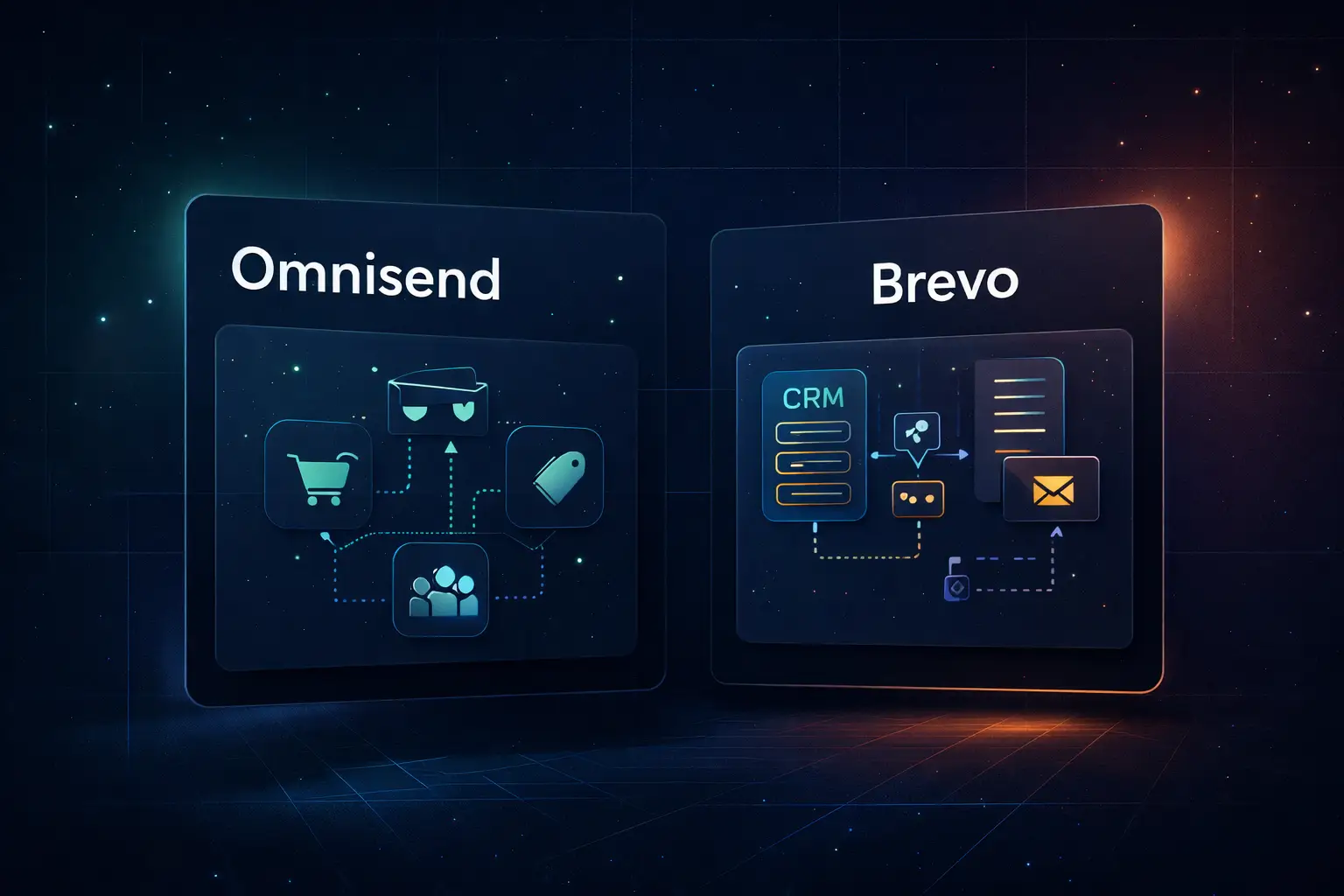
Omnisend vs Brevo: decision shortcut (30 seconds)
Choose Omnisend if your store is lifecycle-first
If your north star is ecommerce revenue from automations (welcome → cart → post-purchase), Omnisend is typically the faster setup. In the Omnisend vs Brevo choice, Omnisend often wins because the product is designed around store events and “ready-to-run” flows.
- Fast wins from prebuilt flows (welcome + cart + post-purchase)
- Multichannel add-ons (email + SMS + push depending on plan)
- Less time building “framework” and more time shipping
Choose Brevo if you’re suite-first (CRM + transactional)
If your business needs a broader platform (CRM, transactional messaging, and marketing in one vendor), Brevo can be the better long-term fit. That’s where Omnisend vs Brevo swings toward Brevo: consolidation beats specialized ecommerce convenience.
- Broader toolset for teams beyond ecommerce marketing
- Good choice when ecommerce is only one channel among many
- Strong if transactional requirements are non-negotiable
Pick your store stage and see the tool that usually fits best.
Recommendation: Omnisend (Starter store)
If your goal is ecommerce revenue flows first, Omnisend typically gets you to “working automations” faster. Start with welcome + cart, then add SMS only after email proves ROI.
Omnisend vs Brevo: quick comparison (what matters for ecommerce)
This table is built for buyers. If a row is a deal-breaker, stop scrolling and choose the winner. (For most stores, the Omnisend vs Brevo answer is decided right here.)
| Decision factor | Omnisend | Brevo | Who wins (typical ecommerce) |
|---|---|---|---|
| Ecommerce-first automations | Flows and triggers are store-centered (welcome/cart/browse/post-purchase). | Automation is strong, but generally more “suite-first” and flexible. | Omnisend |
| CRM + suite breadth | Lifecycle marketing focus (less CRM surface area). | CRM + broader platform features are a major advantage. | Brevo |
| Pricing model risk | Often contact-based; list growth can change cost fast. | Often volume-based; sending behavior drives cost. | Depends |
| Time-to-value | Quickest path to “money flows” for most stores. | Fast start, but you may spend longer tailoring ecommerce reporting. | Omnisend |
| Best fit headline | Ecommerce-led teams that want speed and proven flows. | Businesses that want consolidation (marketing + CRM + transactional). | Depends |
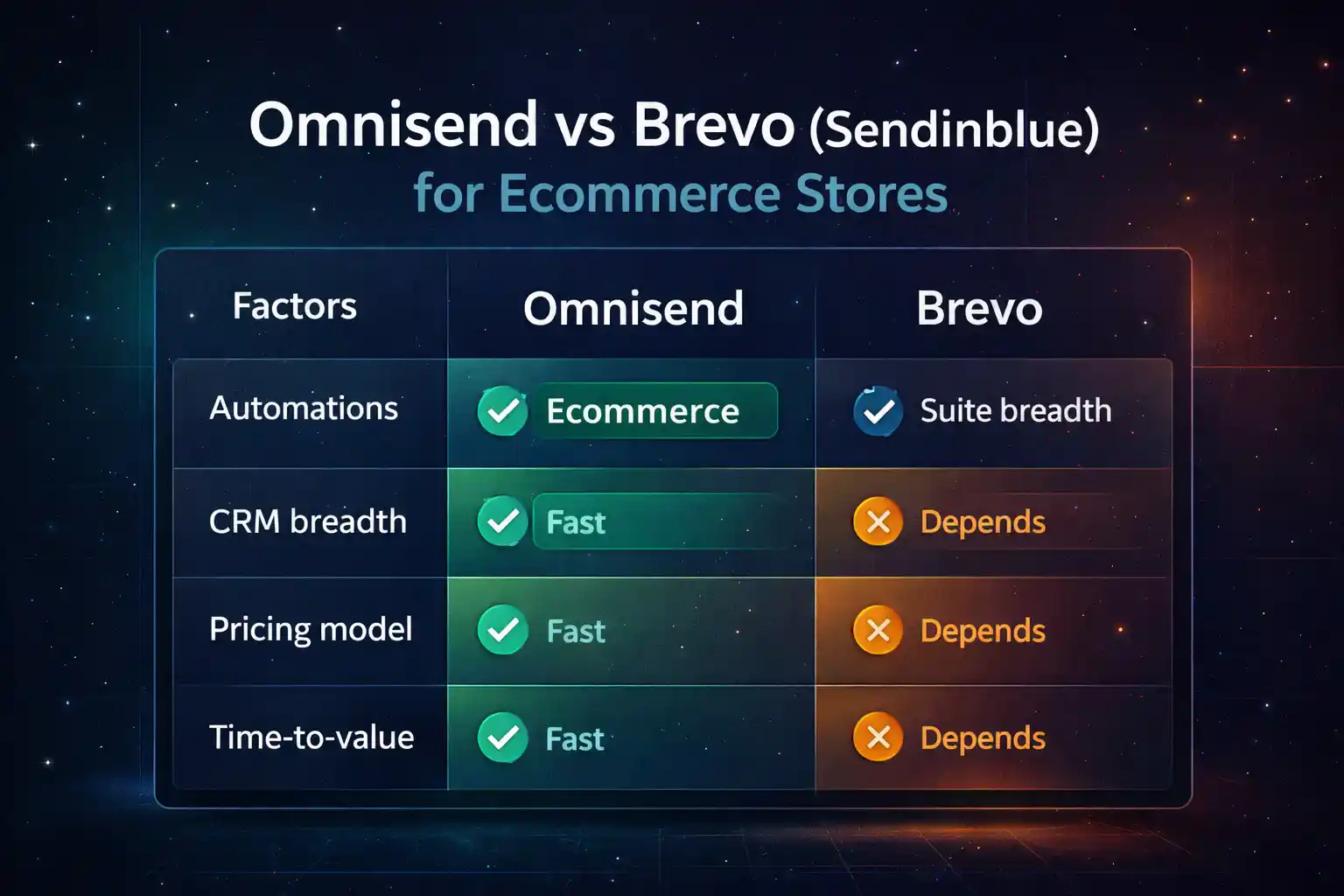
Tip: if you’re ecommerce-first, weight flows + attribution higher. If you’re suite-first, weight CRM + transactional higher.
Where Omnisend wins in the Omnisend vs Brevo decision
1) Prebuilt flows that actually ship
In Omnisend vs Brevo, the biggest difference for store owners is how fast you can launch the core set of revenue automations. If your goal is to get to “working flows” in a week, Omnisend usually feels more native.
The 5-flow ecommerce launch plan (copy this)
- Welcome (2–4 emails) → set expectations + best sellers
- Abandoned cart (2–3 steps) → urgency + reassurance
- Browse abandonment → nudge high-intent visitors
- Post-purchase → how-to / cross-sell / review request
- Winback → bring back 60–120 day inactive buyers
2) Cleaner ecommerce reporting
Store teams want one answer: “Which flow makes money?” Omnisend is typically easier for attribution-first decisions. If you’re comparing Omnisend vs Brevo purely for ecommerce outcomes, this is a big win.
3) Email-first, SMS second (the sane playbook)
The best stores prove ROI with email automations first, then add SMS only where immediacy matters (cart, VIP drops). In the Omnisend vs Brevo comparison, Omnisend often guides teams into that flow-first discipline.
Where Brevo wins in the Omnisend vs Brevo decision
1) Consolidation: marketing + CRM + transactional
If your business needs CRM workflows, sales coordination, or transactional messaging alongside marketing, Brevo becomes compelling. That’s the scenario where Omnisend vs Brevo is less about ecommerce templates and more about platform coverage.
2) Great fit when ecommerce is only one channel
If you market across multiple channels or you have multiple brands/teams, Brevo’s “suite-first” approach can reduce vendor sprawl. In this Omnisend vs Brevo setup, Brevo can be the more scalable organizational choice.
3) Transactional requirements change the shortlist
If transactional is mandatory (system emails, API/SMTP use cases), you should weight that heavily. Many teams choose Brevo in Omnisend vs Brevo specifically for this reason.
Reference: Brevo pricing plans (help doc) .
Omnisend vs Brevo pricing: the trap most buyers miss
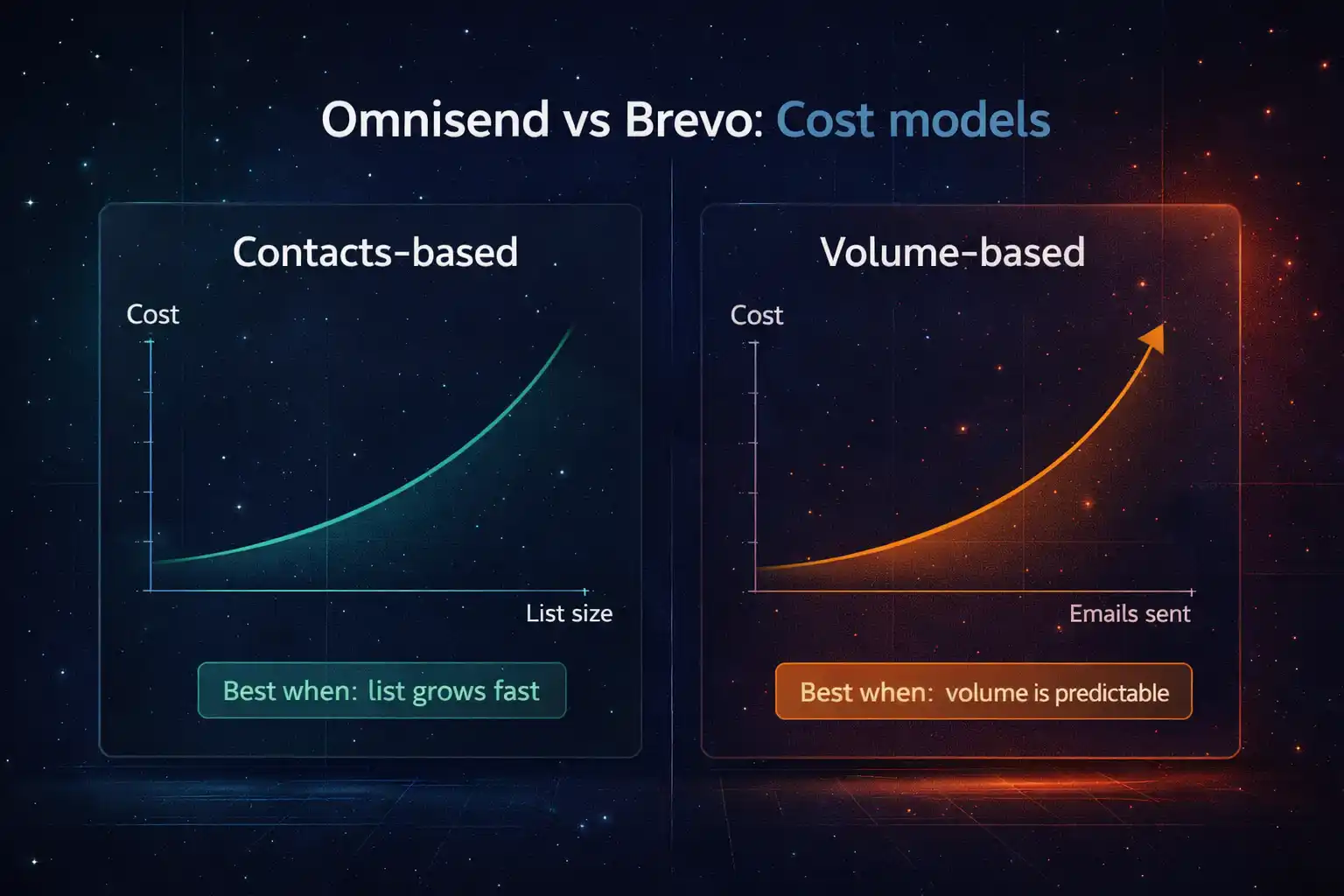
Most Omnisend vs Brevo decisions go wrong because people compare “starting price” instead of cost model. One tool may scale with contacts, the other with email volume. The right question is: which model matches your behavior?
When contact-based pricing hurts
If your list grows quickly but you don’t run a lot of campaigns, contact-based scaling can feel expensive. Fix it with list hygiene, sunset flows, and pruning inactive contacts.
When volume-based pricing hurts
If you send frequently (many segments, many promos), volume can rise fast. Fix it by tightening segmentation and letting automations do the heavy lifting.
Omnisend vs Brevo features matrix (what you’ll really use)
Both tools have long feature lists. This matrix focuses on ecommerce outcomes: flows, segmentation, attribution, and operational fit. If you’re stuck on Omnisend vs Brevo, use this to decide based on what you’ll actually use weekly.
| Feature | Omnisend | Brevo | Notes for store owners |
|---|---|---|---|
| Prebuilt ecommerce flows | Strong | Good | If speed matters most, Omnisend usually wins. |
| CRM / sales workflows | Limited | Strong | If you need CRM as a core, Brevo usually wins. |
| Attribution clarity | Store-first | Depends on setup | Decide based on how you report revenue internally. |
| SMS strategy | Ecommerce-friendly | Broad messaging | Both work; choose by operational fit. |
| Best for | Ecommerce-led teams | Suite-led businesses | This is the heart of Omnisend vs Brevo. |
The “don’t-buy-until” checklist
- Can I build cart + post-purchase without custom code?
- Can I segment by purchase history easily?
- Do I get clear revenue attribution per flow?
- Is the email editor fast enough for weekly work?
- Are forms/popups easy to connect to segments?
- Can I A/B test subject lines and offers quickly?
- Is SMS optional and controllable (not forced spend)?
- Do I have deliverability basics (domain auth) covered?
- Can I export data if I ever switch tools?
- Is support adequate for my store stage?
Execution paths (pick one and ship)
Path A: Omnisend (most ecommerce stores)
Don’t overthink Omnisend vs Brevo—ship the core flows and measure revenue.
- Day 1: Connect store + set sender/domain basics.
- Day 2: Launch Welcome + Abandoned cart.
- Week 1: Add Post-purchase.
- Week 2: Add Browse abandonment + VIP segment.
- Week 3: Add SMS only where it clearly boosts revenue.
Switching tools? Run the migration estimator first.
Path B: Brevo (suite-first / CRM-heavy)
If your Omnisend vs Brevo decision is about consolidation, this path is for you.
- Day 1: Connect store + confirm data sync.
- Day 2: Build 1 core automation + 1 newsletter template.
- Week 1: Define CRM stages and handoffs (if relevant).
- Week 2: Add transactional requirements (if needed).
- Week 3: Tighten segmentation and reporting cadence.
Brevo plan basics are in the help center (linked above).
FAQs (Omnisend vs Brevo)
Is Omnisend vs Brevo better for Shopify?
For Shopify-first stores, Omnisend vs Brevo usually comes down to speed: Omnisend tends to get core ecommerce flows live faster. Choose Brevo if your Shopify store is part of a bigger CRM/transactional stack.
Which one is cheaper in Omnisend vs Brevo?
It depends on cost model. If your list is large but you don’t send often, volume-based pricing can be cheaper. If you actively run many ecommerce flows and want faster time-to-value, Omnisend vs Brevo often favors Omnisend.
Can both do email + SMS?
Yes. The Omnisend vs Brevo decision is less about “can it do SMS” and more about how the platform fits your ecommerce workflow.
What’s the fastest way to migrate?
Rebuild logic first (welcome + cart + post-purchase), then templates. For scope, use our migration estimator.
Browse more: /email-automation-tools/ · Back to home