
Omnisend vs Drip: Ecommerce Automations Compared
Omnisend vs Drip
Omnisend vs Drip is a “money flows” decision: welcome series, cart recovery, browse abandonment, and post-purchase upsells. If you want a quick answer: Omnisend usually wins for most online stores because it ships ecommerce flows faster. Drip wins when your edge is deep segmentation and personalization.
Note: /go/ links may be affiliate links (same price for you). This comparison is written to help you pick fast and avoid wrong-tool friction.
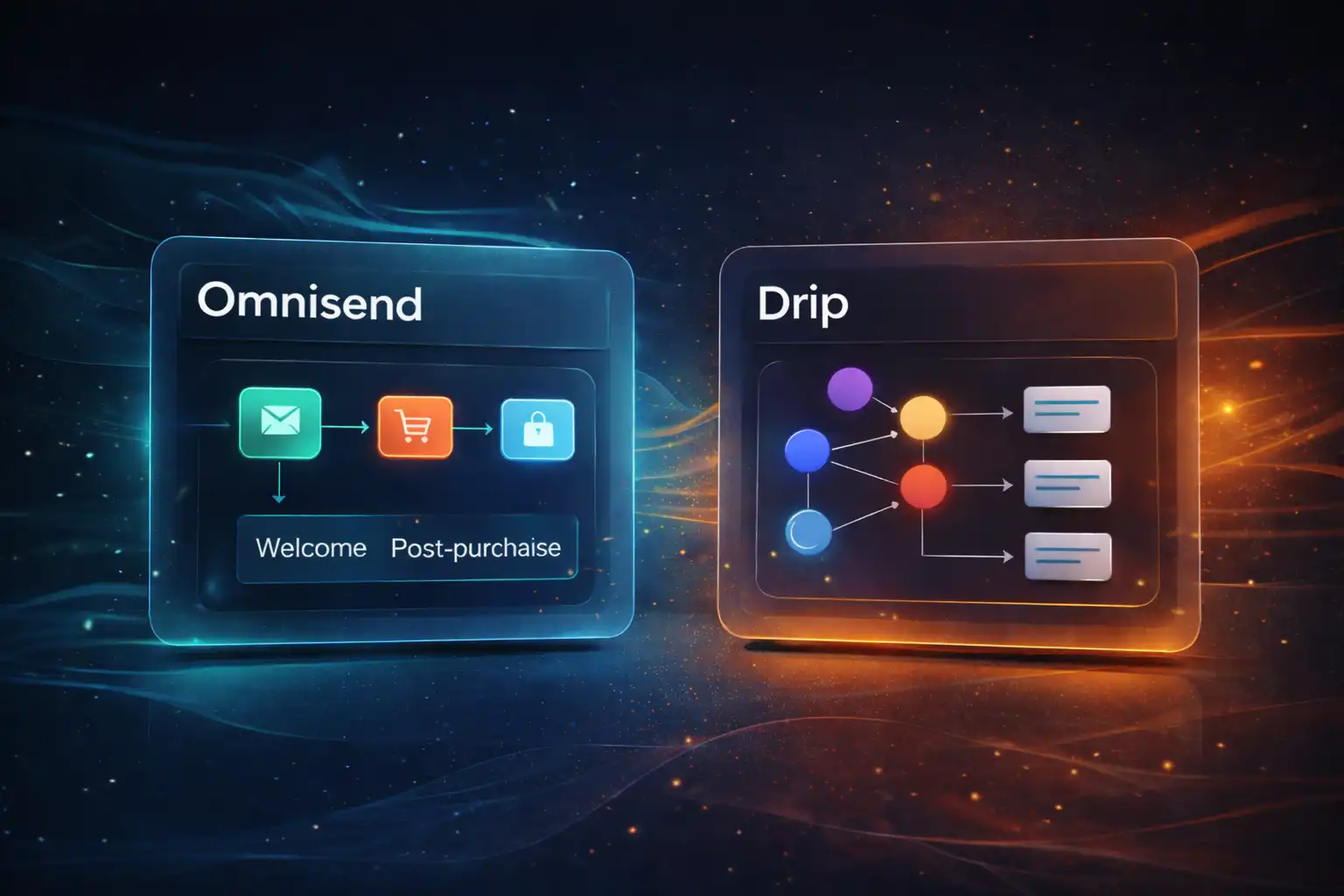
Omnisend vs Drip: 30-second decision shortcut
Choose Omnisend if you want revenue flows live fast
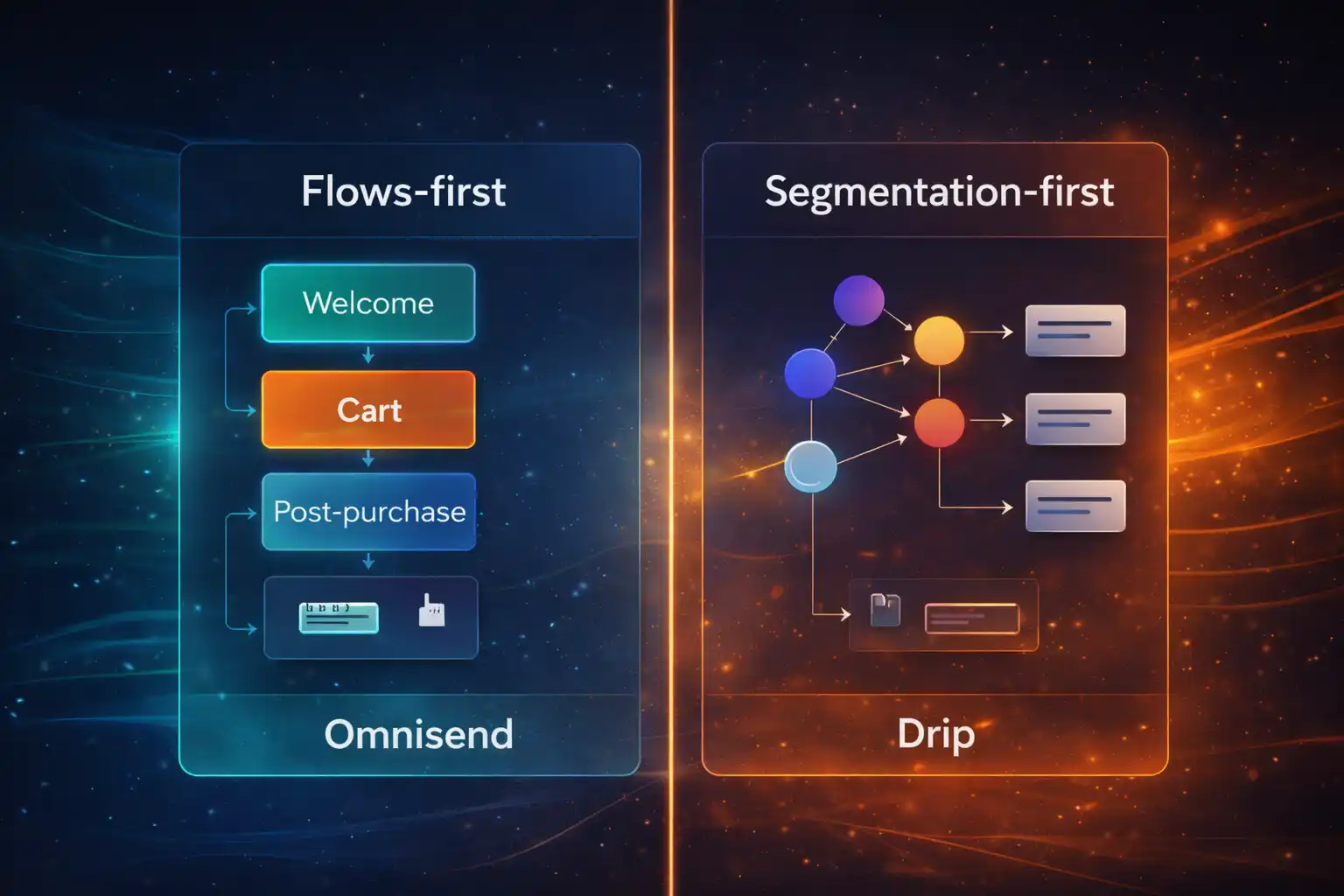
In Omnisend vs Drip, Omnisend is the “flows-first” choice. If your goal is to launch the core ecommerce automations quickly (welcome → cart → post-purchase), you’ll typically get to ROI sooner.
- Lower setup friction for the common store lifecycle
- Cleaner operating model for small and mid teams
- Best for: Shopify/WooCommerce stores prioritizing speed
Choose Drip if deep segmentation is your advantage
Drip is great when you genuinely have a segmentation plan and you’ll maintain it. If your store has lots of categories, repeat buyers, and you want heavy personalization, Omnisend vs Drip can lean toward Drip.
- Advanced segmentation and lifecycle logic
- Higher upside when personalization drives AOV/LTV
- Tradeoff: more build time before payoff
Pick your store style and get the typical winner.
Recommendation: Omnisend (flows-first)
If you’re choosing Omnisend vs Drip and your priority is speed, Omnisend usually wins time-to-value. Ship welcome + cart + post-purchase first, then tighten segments.
Quick comparison table (Omnisend vs Drip)
Skim this first. It’s what you’ll feel in week one (setup friction, segmentation depth, and how fast you can launch revenue flows).
| Factor | Omnisend | Drip | Typical winner |
|---|---|---|---|
| Time-to-value | Flows are store-first and quick to launch. | More “build your system” energy. | Omnisend |
| Ecommerce lifecycle flows | Strong defaults: welcome/cart/post-purchase. | Powerful, but benefits from a plan. | Omnisend |
| Segmentation depth | Great for standard ecommerce segments. | Excellent for advanced personalization. | Drip |
| Best team fit | Marketers shipping weekly. | Marketers + operators who love logic. | Depends |
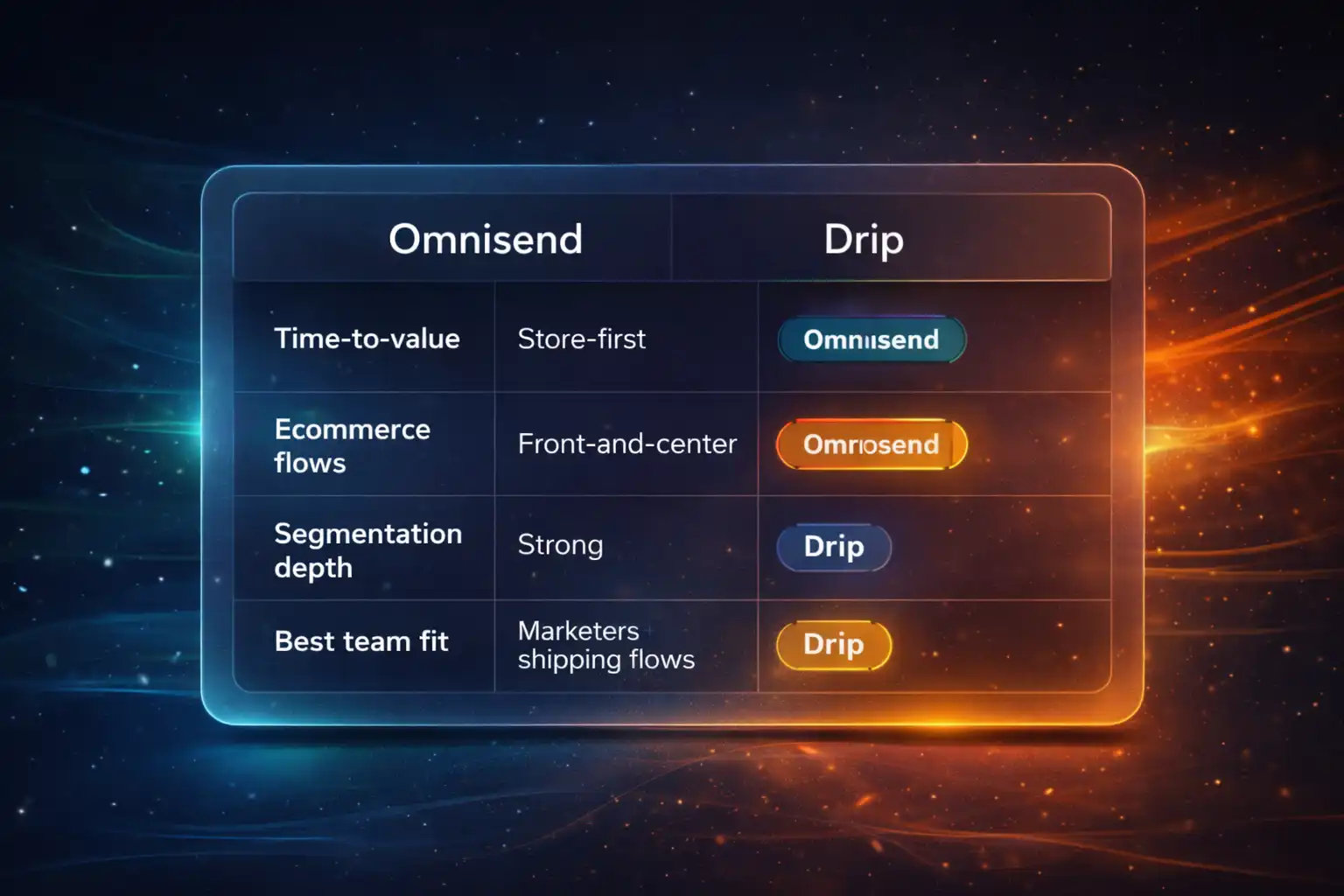
Key idea: Omnisend vs Drip is basically speed vs segmentation upside. Your team determines which matters more.
What really decides Omnisend vs Drip for ecommerce
1) The “flows-first” test
If you can launch these three flows in 7 days, you’ll beat most stores: Welcome, Abandoned Cart, and Post-purchase. In Omnisend vs Drip, Omnisend usually gets you there faster because the defaults match ecommerce reality.
7-day rollout plan (works for both tools)
- Day 1: domain/auth + store sync check (events firing correctly).
- Day 2: welcome series (2–4 emails) + best sellers.
- Day 3: abandoned cart (2–3 steps) + incentive rule.
- Day 4: post-purchase (review + cross-sell) — use this blueprint.
- Day 5–7: segment hygiene + deliverability baseline + reporting.
2) The “segmentation edge” test
Drip shines when your business actually wins through personalization. If you have a real plan (3–6 core segments you will maintain), Omnisend vs Drip can tilt to Drip. Without that plan, segmentation becomes complexity without ROI.
3) The maintenance test (most people ignore this)
A tool is only “better” if your team can keep it clean. That means readable flows, sane segments, and a weekly cadence. The hidden cost in Omnisend vs Drip is not the subscription—it’s the time it takes to keep the system healthy.
- Omnisend often wins when you want predictable weekly execution.
- Drip often wins when you have a data/ops mindset and enjoy building logic.
Don’t compare “starting price” screenshots. Compare your likely usage: list growth, number of automations, and how segment-heavy you go. In Omnisend vs Drip, costs become “worth it” only when you actually use the tool’s strengths.
Where Omnisend can surprise you
If your list grows fast and you keep inactive subscribers, pricing can climb. The fix is simple: run a re-engagement flow and prune.
- Keep an “engaged 90 days” segment.
- Run a monthly winback/re-engagement flow.
- Suppress or remove long-inactive contacts.
Where Drip can surprise you
Drip pays off when you use segmentation power. If you run simple flows with minimal segmentation, you may feel you bought more than you need.
- Write down 3–6 segments first.
- Personalize only where it moves revenue (AOV/LTV).
- Keep logic readable so the team can maintain it.
FAQ (Omnisend vs Drip)
Is Omnisend vs Drip better for Shopify?
For most Shopify stores, Omnisend vs Drip is decided by speed: Omnisend usually gets revenue flows live faster. Drip can win if your edge is segmentation-driven personalization.
Which tool is easier for a small ecommerce team?
In Omnisend vs Drip, Omnisend is usually easier because the defaults match ecommerce flows and you can ship faster with less setup.
Does Drip outperform Omnisend for personalization?
Often yes—if you actually use it. The Omnisend vs Drip trade is: Drip can unlock higher upside from personalization, but it requires strategy and ongoing maintenance.
What should I implement first to get ROI?
Regardless of Omnisend vs Drip, start with Welcome, Cart Recovery, and Post-purchase. Then add browse abandonment and winback. Use this post-purchase blueprint to launch quickly.
Sources / References
Official Drip product info: Drip (official site).
Features and pricing can change; confirm limits on official pages before purchasing.