
Choosing between Omnisend vs HubSpot 2025 comes down to your business model. If you are a Shopify/WooCommerce store and want
revenue-ready email+SMS automations with lightweight CRM, Omnisend wins on speed-to-value and price. If you’re a B2B pipeline-heavy team that needs advanced sales CRM (pipelines, custom objects), HubSpot fits — but expect a steeper bill. This guide compares them through a small business ecommerce lens.
Bottom line: ecommerce SMBs get faster ROI with Omnisend’s built-in flows + SMS. HubSpot is powerful CRM, but you’ll pay for depth you may not use.
TL;DR — who should choose which?
- Choose Omnisend if you sell online (Shopify/WooCommerce), want prebuilt revenue flows, native SMS, and clean pricing.
- Choose HubSpot if your primary need is advanced sales CRM (B2B pipelines, SDR motions) and you accept higher costs.
- Hybrid? Run Omnisend for ecommerce marketing and sync to a separate sales CRM if/when needed.
Validate revenue in weeks, not months. No dev team required — ready ecommerce flows.
Takes minutes to connect Shopify/Woo. Cancel anytime.
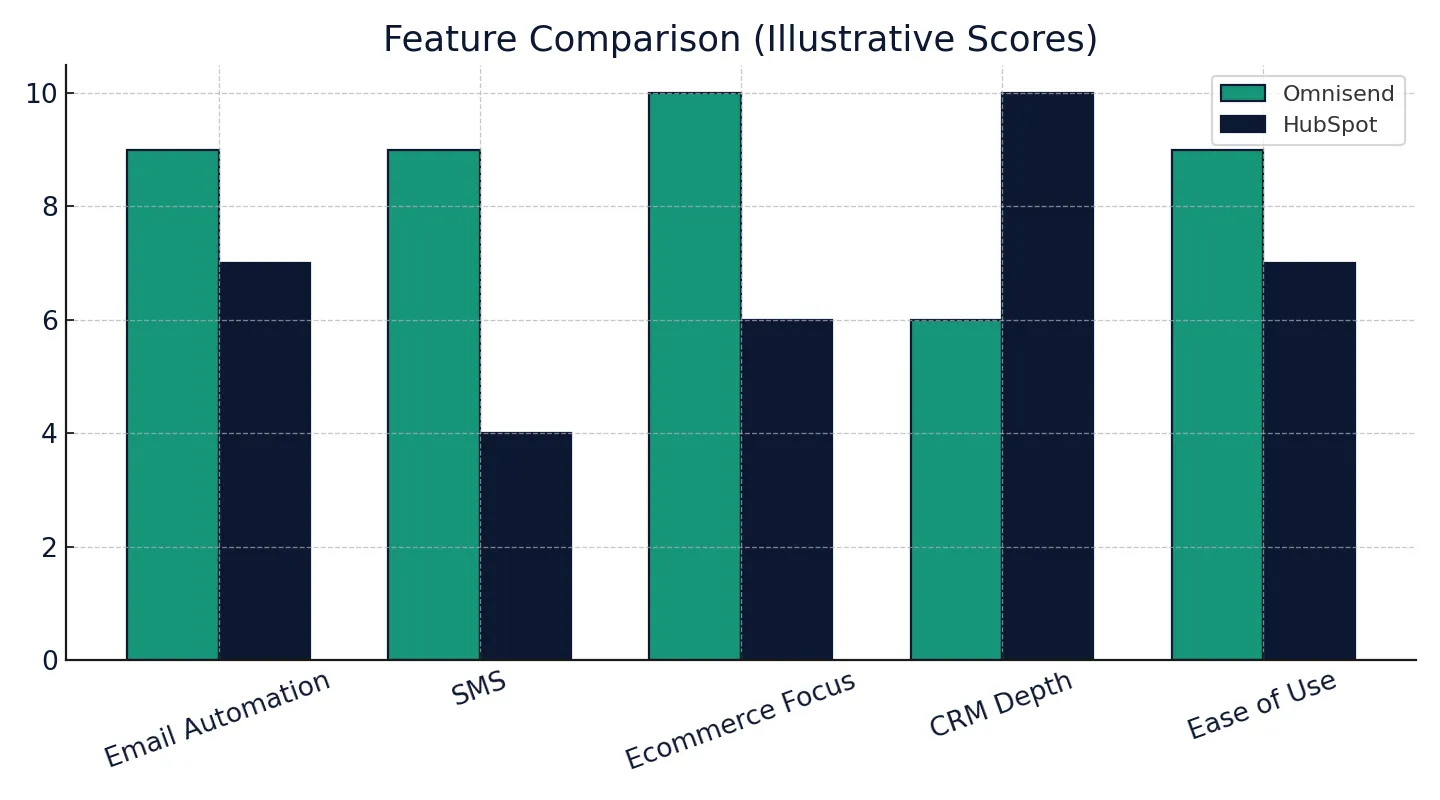
Quick comparison (ecommerce SMB use case)
| Omnisend | HubSpot | |
|---|---|---|
| Shopify/Woo integration depth | ✓ native | ✓ apps required |
| Prebuilt ecommerce automations | ✓ turnkey | ✓ more setup |
| SMS built-in | ✓ | ✗ add-ons |
| CRM for small teams | ✓ lightweight | ✓ advanced (overkill?) |
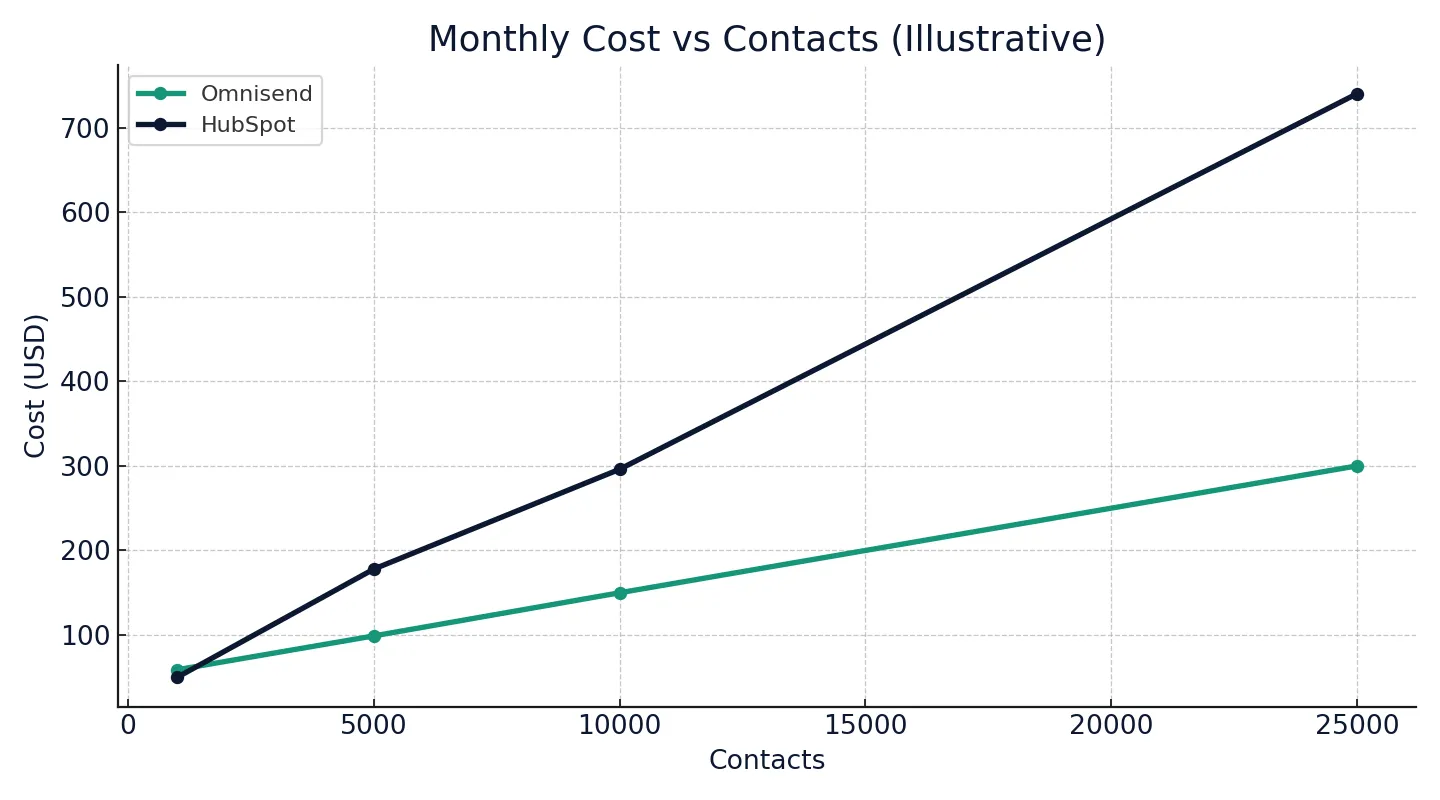
| Total cost for growth | ✓ predictable | ✗ scales up fast |
Pricing pages change often — confirm live before you decide.
Pricing & value for money (verify live)
For ecommerce SMBs, the key is cost per incremental order. Omnisend’s plans include ecommerce automations and optional SMS credits on Pro; HubSpot’s costs can rise with sales seats, hubs and contact tiers. Always check current pricing before committing.
- Omnisend pricing (affiliate)
- SMS Credits Subscription (affiliate)
- SMS calculator (affiliate)
- SMS pricing explained (affiliate)
Validate revenue in weeks, not months. No dev team required — ready ecommerce flows.
Takes minutes to connect Shopify/Woo. Cancel anytime.
Feature matrix (SMB ecommerce — 18+ checks) for Omnisend vs HubSpot 2025
| Capability | Omnisend | HubSpot |
|---|---|---|
| Shopify app & deep order sync | ✓ native | ✓ app-layer |
| WooCommerce integration | ✓ | ✓ plugin-based |
| Prebuilt ecommerce flows (cart/checkout) | ✓ turnkey | ✓ more setup |
| SMS built-in (global) | ✓ | ✗ via add-ons |
| Email editor + product blocks | ✓ dynamic | ✓ |
| Deliverability & domain auth guides | ✓ | ✓ |
| Attribution: revenue by flow/campaign | ✓ clear | ✓ broader |
| LTV / cohorts (ecom focus) | ✓ pragmatic | ✓ generic CRM-first |
| Audience segmentation (RFM / affinity) | ✓ built-for-retail | ✓ |
| Multi-store analytics (Shop/Woo) | ✓ | ✓ |
| Popups & capture with coupons | ✓ | ✓ via tools |
| CRM pipeline & deal stages | ✓ basic | ✓ enterprise depth |
| Custom objects & advanced CRM | ✗ | ✓ CRM strength |
| Learning curve for marketers | ✓ fast | ✓ steeper |
| Time to first revenue | ✓ days | ✓ weeks |
| Total cost at scale (SMB) | ✓ lower | ✗ higher |
| Support & ecommerce expertise | ✓ retail-first | ✓ CRM-first |
| Best for | DTC, Shopify/Woo SMBs | B2B sales-led teams |
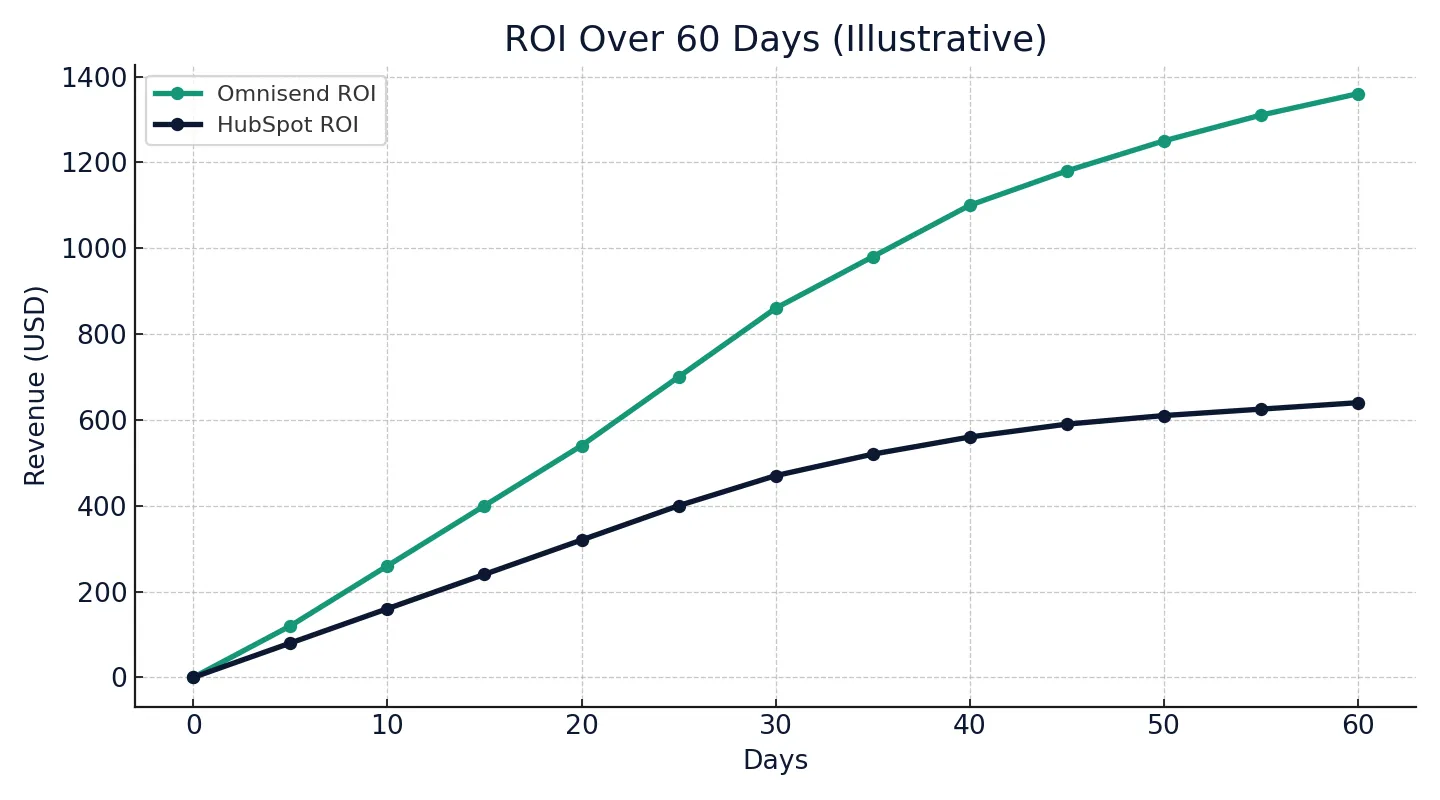
ROI reality check: which one pays back faster?
In ecommerce, automation drives most revenue with minimal manual work. Omnisend prioritizes these flows out-of-the-box; HubSpot can do them, but you’ll configure more pieces and likely pay for broader CRM.
Validate revenue in weeks, not months. No dev team required — ready ecommerce flows.
Takes minutes to connect Shopify/Woo. Cancel anytime.
Deliverability & SMS: practical differences Omnisend vs HubSpot 2025
- Domain alignment & warmup: both support authentication; Omnisend documentation is ecommerce-oriented and fast to apply.
- SMS: Omnisend has native SMS with monthly credits on Pro. HubSpot typically needs an add-on or external SMS provider.
- Reporting: Omnisend shows revenue by flow and per message; HubSpot rolls up CRM-wide views better for sales orgs.
Final verdict for Omnisend vs HubSpot 2025
Pick Omnisend if you’re an ecommerce SMB and want fast, compounding revenue from email+SMS automations with simple analytics and fair pricing. Pick HubSpot only if your top priority is sales CRM sophistication and you’re comfortable with the extra cost and setup.