
Omnisend vs Klaviyo (Shopify): Which One Wins in 2026?
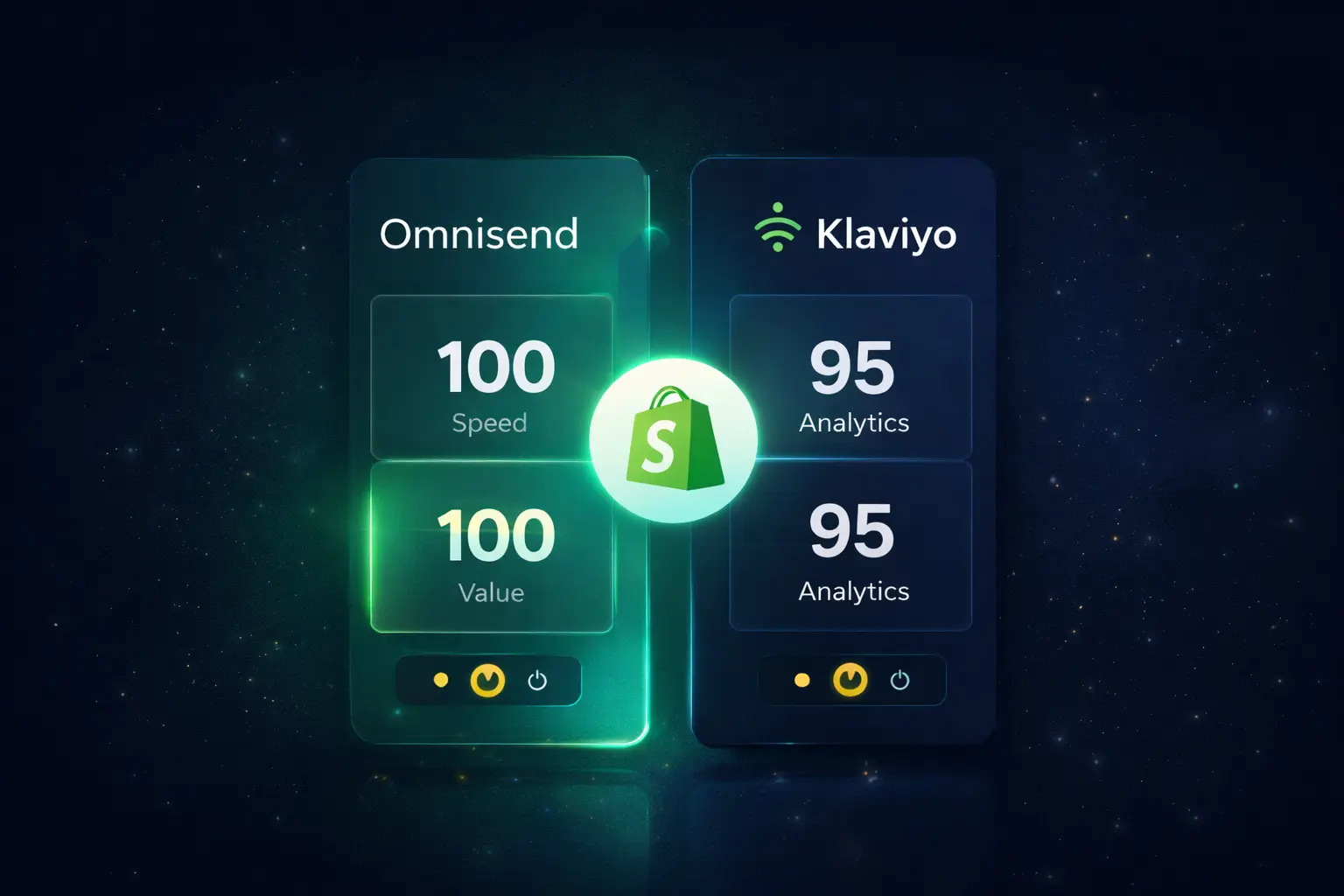
If you’re on Shopify and choosing between Omnisend and Klaviyo, this guide gives you a straight answer: who wins for your store size, your team, and your retention goals — plus the exact “when to switch” thresholds.
Verdict (most Shopify stores): Omnisend wins in 2026 if you want fast setup, ecommerce-native automation, and predictable costs while scaling.
Klaviyo wins if your retention strategy depends on predictive analytics, deep segmentation across a large data stack, and you have time (or an agency) to fully optimize it.
Quick comparison (30 seconds)
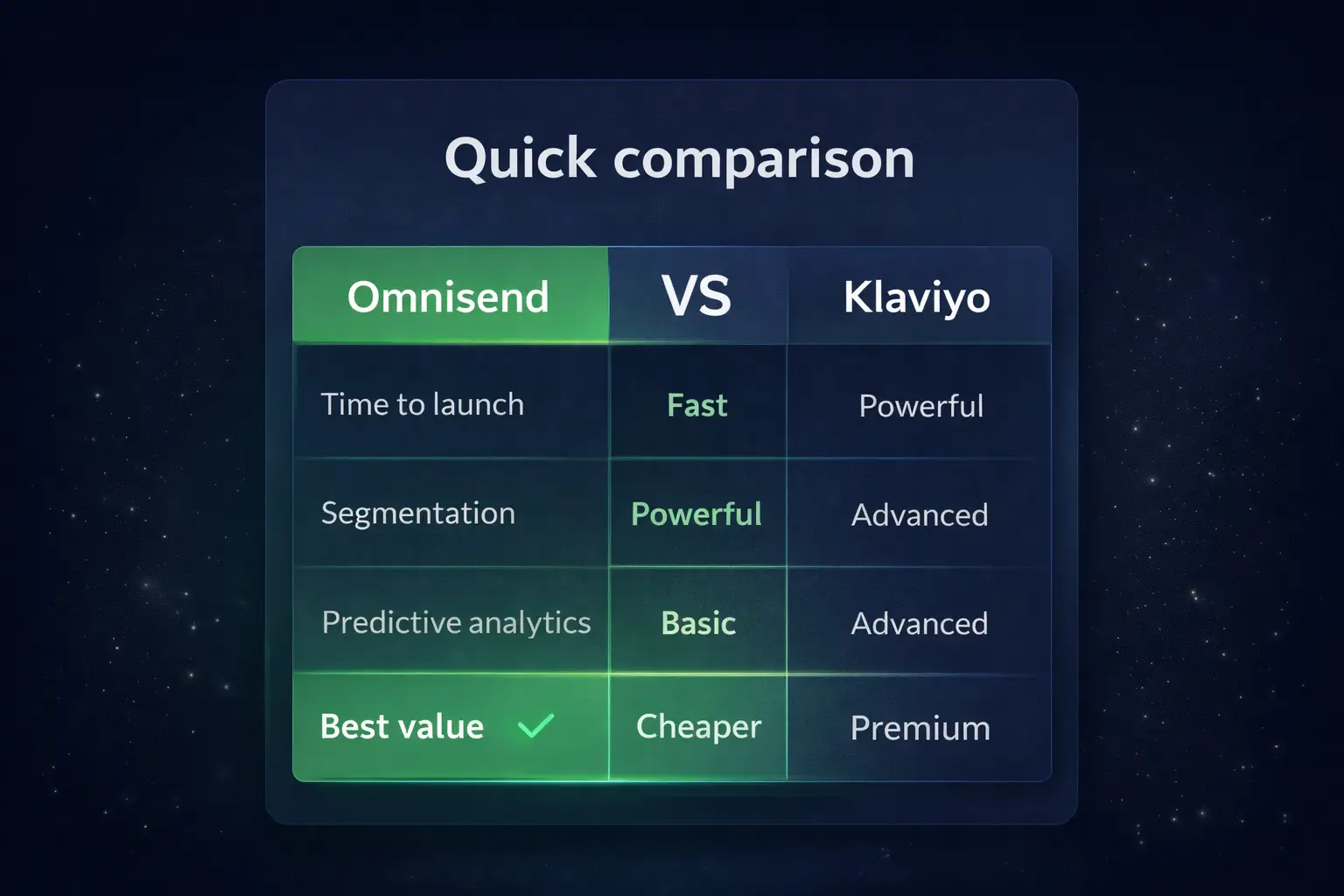
Read this table first. If you already “feel” the winner, scroll down to the decision wizard and you’re done. If you’re still unsure, the rest of the article proves the verdict with the exact differences that matter on Shopify.
| Decision factor | Omnisend (Shopify) | Klaviyo (Shopify) | Winner |
|---|---|---|---|
| Time to launch (templates + prebuilt flows) | Very fast: ecommerce-focused defaults | Fast, but higher payoff with deeper setup | Omnisend |
| Automation for core Shopify lifecycle | Strong, clean flows for revenue events | Very deep logic + edge cases | Tie |
| Segmentation (behavior + attributes) | Powerful, simpler to operate | Best-in-class depth + flexibility | Klaviyo |
| Predictive analytics (CLV, churn risk, next order) | Not the core differentiator | Signature feature set | Klaviyo |
| For lean teams (owner/operator, small marketing) | Easiest path to “printing revenue” | Powerful, but easiest to overcomplicate | Omnisend |
| Best value for typical Shopify SMB | Usually cheaper at similar output | Can be premium-priced at scale | Omnisend |
Who wins for your Shopify store (simple decision wizard)
Instead of guessing, use this 20-second selector. It’s deliberately simple — because the “best platform” is the one you’ll actually execute consistently.
Decision wizard
Pick what’s true for your store. The recommendation updates instantly. (No data is sent anywhere — this is purely on-page.)
The real difference in 2026: execution vs maximum power
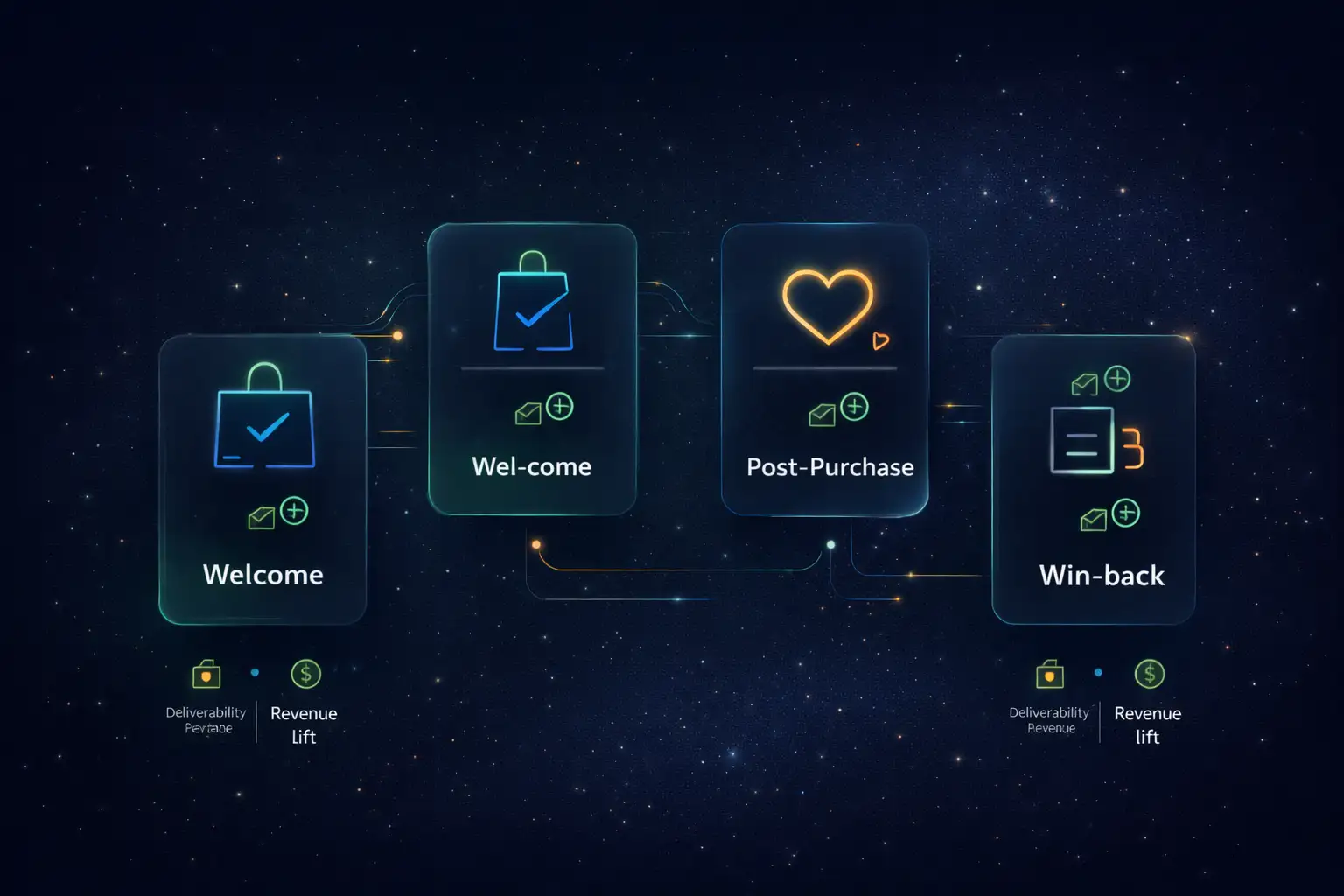
Both platforms can run the “classic Shopify money flows” (welcome, browse abandon, cart abandon, post-purchase upsell, win-back). The difference is what happens after week 2:
Omnisend’s advantage
Omnisend is built to get a Shopify store profitable quickly — with fewer moving parts. You’ll spend less time engineering segments and more time shipping campaigns, refining offers, and improving your flow copy.
- Fast-to-revenue: strong defaults, less setup friction.
- Ecommerce-native: lifecycle messaging is the product, not an add-on.
- Lean-team friendly: easier governance, fewer “gotchas.”
Klaviyo’s advantage
Klaviyo shines when you treat retention like an engineered system: predictive models, deep segmentation, and “every customer gets a different journey.” The payoff can be big — if you have the team and discipline.
- Segmentation depth: more ways to slice behavior + value.
- Predictive analytics: CLV, churn risk, next order concepts.
- Data-centric workflows: powerful for mature brands.
Features matrix (what matters on Shopify)
This isn’t a “checkbox list.” It’s the set of capabilities that typically changes revenue, workload, and scaling cost for Shopify retention in 2026.
| Capability | What you should care about | Omnisend | Klaviyo |
|---|---|---|---|
| Core lifecycle flows | Welcome, abandon, post-purchase, win-back — must be fast to deploy + easy to iterate | Strong | Strong |
| Segmentation | Can you build “high intent” segments without becoming a part-time data engineer? | Very good | Best-in-class |
| Predictive analytics | Only matters if you’ll run strategies driven by CLV/churn/next-order predictions | Basic / not core | Signature |
| SMS + multi-channel | How easily can you orchestrate SMS without turning it into “spam”? | Ecommerce-native | Strong |
| Templates + speed | Fewer “design hours” = more testing and revenue work | Faster | Fast |
| Reporting | Do you get insights that actually change decisions (not just charts)? | Solid | Deeper |
| Operational complexity | Setup + maintenance + “things that can break” when your stack grows | Lower | Higher |
Deliverability & flow performance: the boring part that decides revenue
People obsess over platform features, but the money is often decided by: list hygiene, sending behavior, smart throttling, and whether your flows are tight and relevant. In practice, both platforms can deliver — the bigger risk is execution.
If you want a practical Shopify-specific framework for flows, start here: Shopify email automation guide. Then implement the same flow logic in either platform — and measure revenue per recipient by segment.
Pricing reality in 2026 (the part most comparisons hide)
Pricing changes over time and varies by region and contact tier, so you should always verify the current calculator before committing. But the structure is what matters:
Omnisend: typically easier to justify
- Great for Shopify SMB: strong functionality without needing multiple add-ons.
- Fast scaling model: you pay as list size grows (watch your active contacts hygiene).
- Action step: use your current list size and estimate sends to pick a tier, then build flows first.
Klaviyo: premium when you scale + add-ons
- Power costs: deeper analytics and add-ons can move your TCO up.
- Worth it when: you’ll actively use predictive + segmentation to increase profit per customer.
- Risk: paying for sophistication you don’t operationalize weekly.
When should you migrate from Klaviyo to Omnisend (and when you shouldn’t)
Switching platforms has a cost: data mapping, flow rebuilds, template parity, deliverability warm-up, and a few weeks of “noise” in reporting. So the only reason to switch is if you’ll reduce complexity and keep (or improve) revenue.
Migrate to Omnisend if…
- You want fewer tools and faster weekly execution.
- Your flows are “standard ecommerce” and segmentation isn’t extremely custom.
- You want strong results without paying the “complexity tax.”
Stay on Klaviyo if…
- Your strategy depends on predictive analytics, CLV-based bidding, or churn modeling.
- You have a retention specialist or agency building deep segments + branches weekly.
- You’re already profitable and the platform isn’t your bottleneck.
Final verdict (2026)
For Shopify stores in 2026, the best “winner” is usually the platform that lets you execute faster and stay consistent:
Choose Omnisend if you want the most reliable path to retention revenue with a lean team: launch proven flows quickly, run campaigns consistently, and refine offers every week.
Choose Klaviyo if you’ll actively use predictive analytics and advanced segmentation to engineer profit per customer — and you have the operational maturity to keep the account clean and optimized.
FAQ (Shopify owners ask this every week)
Is Omnisend or Klaviyo better for Shopify beginners?
If you want speed and simplicity, Omnisend is usually easier to launch profitably with fewer moving parts. Klaviyo can be amazing — but it rewards teams that will actively use advanced segmentation and analytics.
Can I run both Omnisend and Klaviyo at the same time?
Technically yes, but it’s rarely smart. You’ll split data, duplicate flows, and confuse attribution. Pick one “system of record” for retention and commit for 90 days before judging results.
What’s the safest way to switch from Klaviyo to Omnisend?
Map your key Shopify events, rebuild the top revenue flows first (welcome + cart abandon + post-purchase + win-back), migrate templates, and warm sending gradually. Use our guided checklist here: Klaviyo → Omnisend migration.
Does the platform decide deliverability?
Deliverability is mostly list quality + sending behavior + content relevance. Both platforms can deliver well. The bigger risk is sending too much to cold segments or ignoring hygiene.
What’s the #1 thing I should do first after choosing?
Implement the four core money flows (welcome, cart abandon, post-purchase, win-back), then optimize: subject lines, offers, timing, and segmentation. Use this Shopify framework: Shopify email automation.