Omnisend vs Mailchimp for Ecommerce: Automation & ROI
This guide is built for one question: which platform makes your store more money with less work? If you’re deciding between Omnisend and Mailchimp, you don’t need 100 random features — you need clarity on lifecycle automation, deliverability, segmentation, and predictable cost as your list grows.
Disclosure: Some links may be affiliate links (we may earn a commission at no extra cost to you).
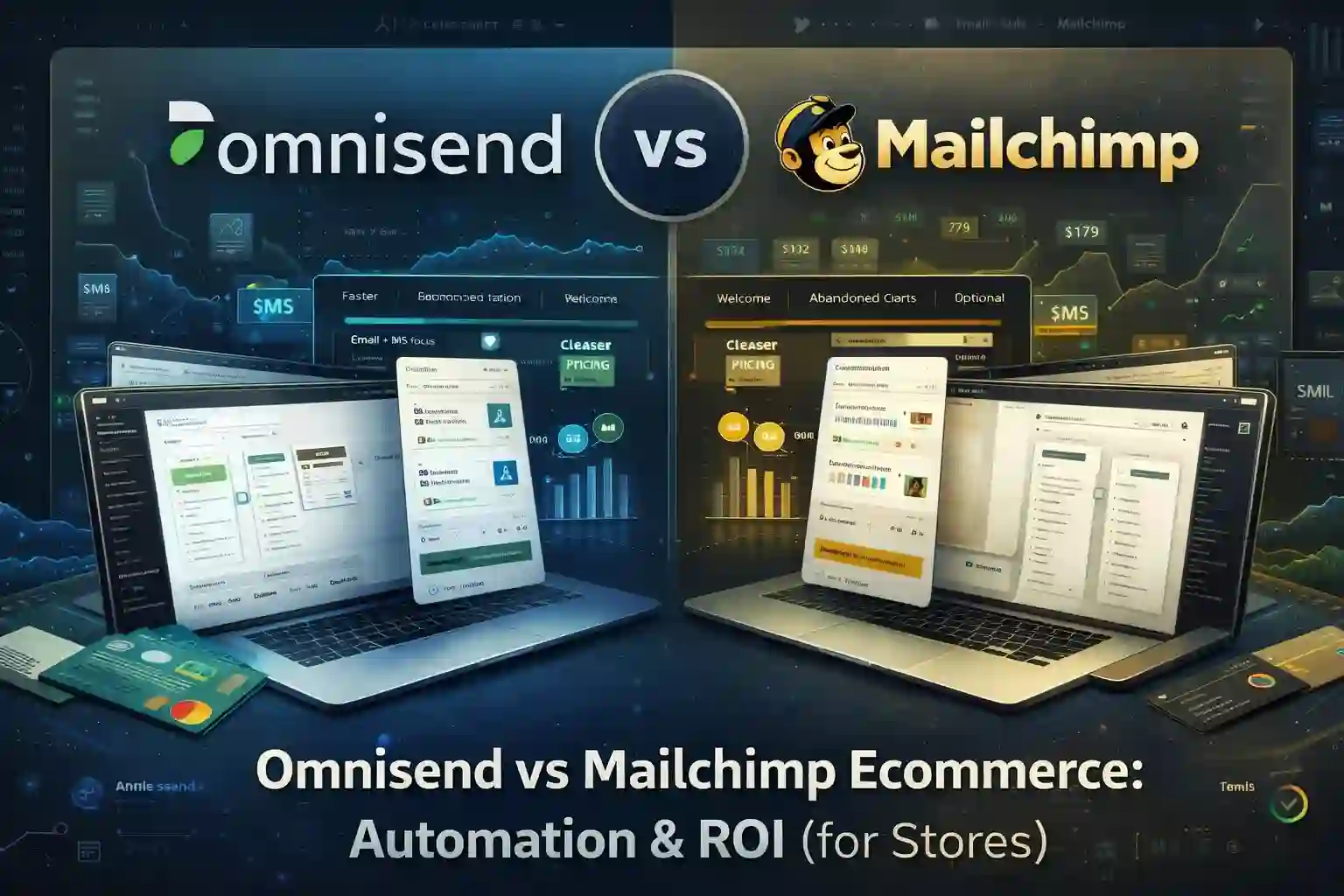
Omnisend vs Mailchimp ecommerce: quick verdict (scan this first)
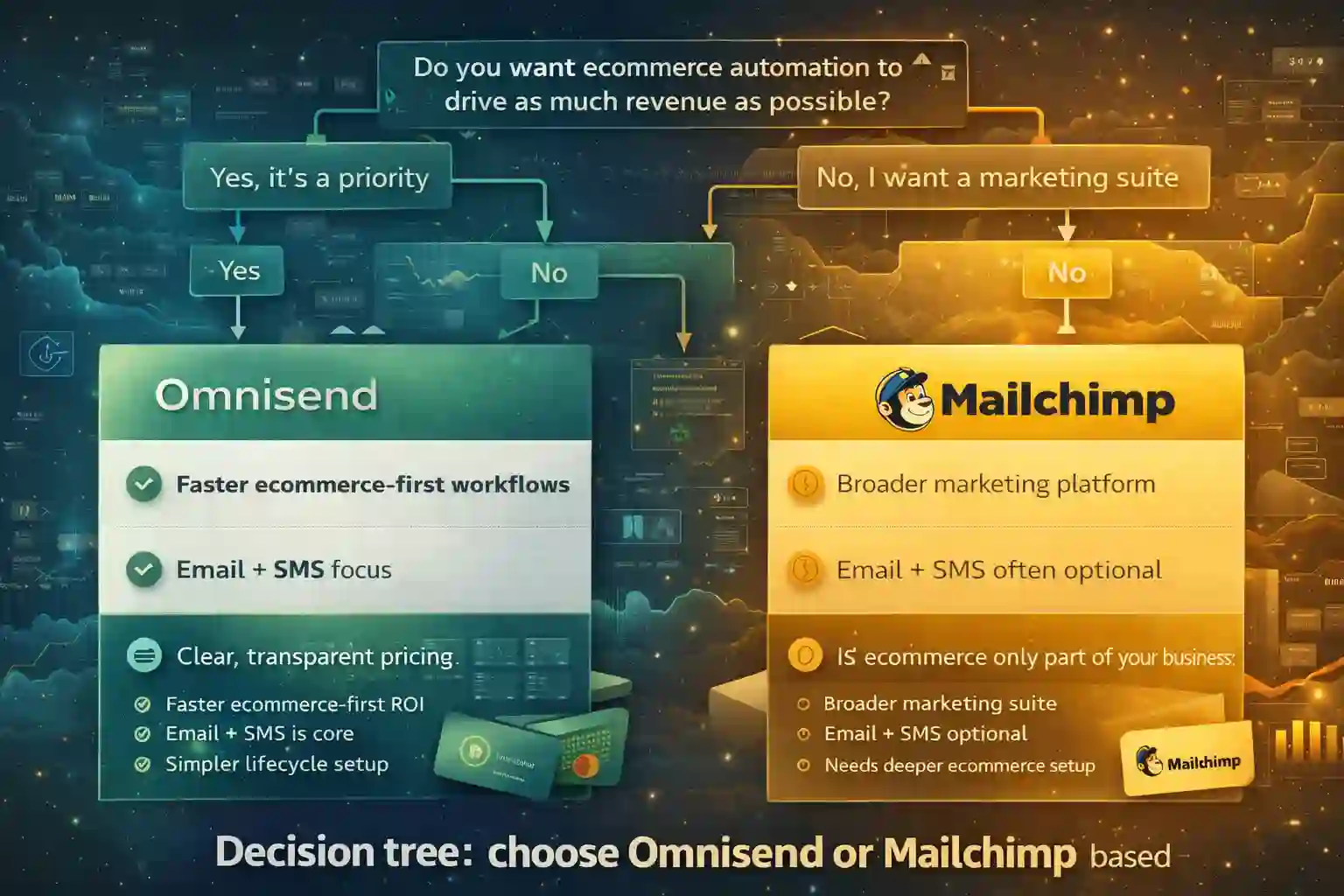
If your store wants automation-driven revenue (welcome, abandoned cart, browse abandonment, post-purchase, winback), Omnisend usually wins because it’s built around ecommerce lifecycle workflows. If you want a broader “marketing suite” and ecommerce is only part of your business, Mailchimp can still be a valid choice.
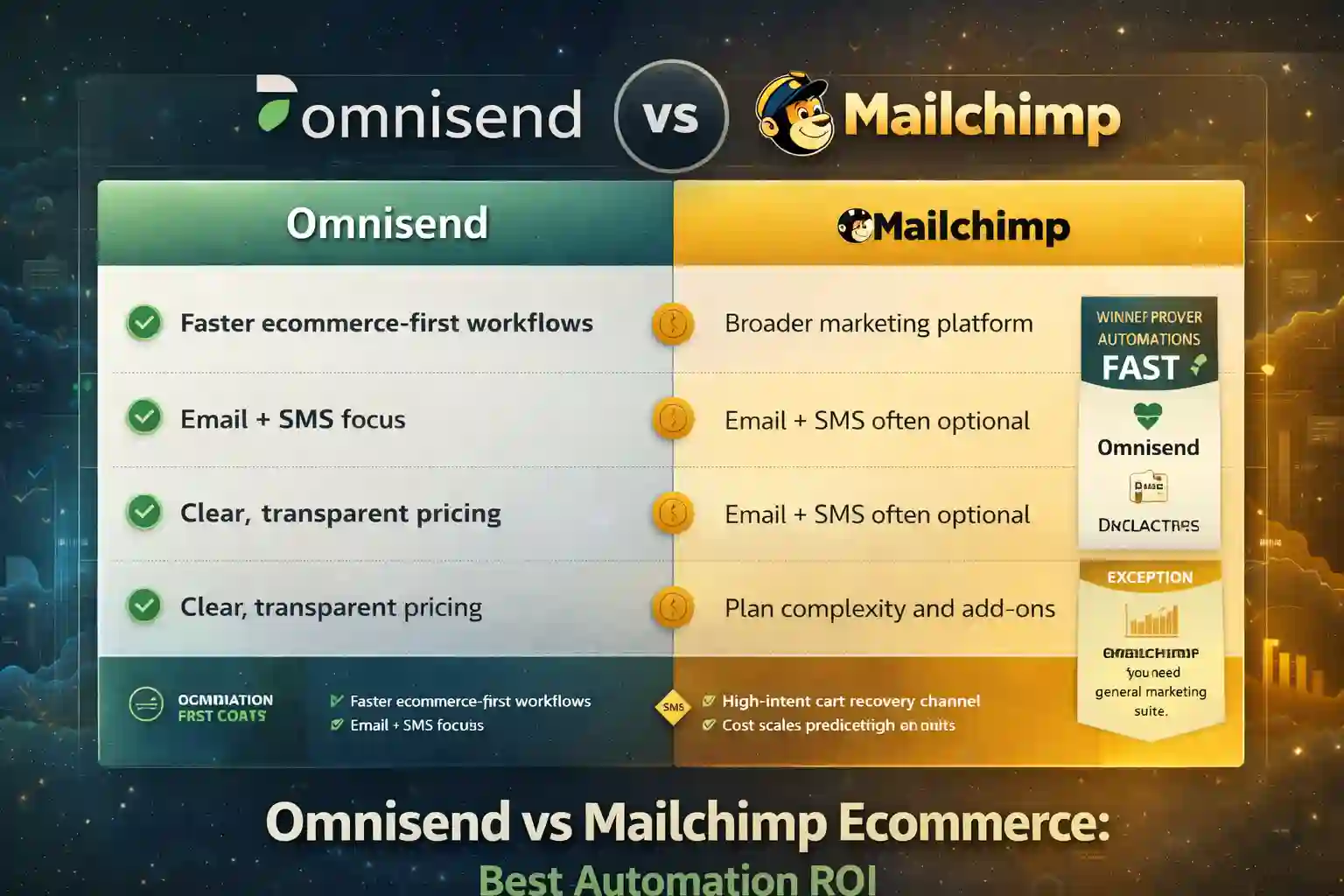
| Decision factor | Omnisend (typical ecommerce fit) | Mailchimp (typical fit) | ROI impact |
|---|---|---|---|
| Time to launch automations | Fast path to lifecycle flows | Works, but depends on setup depth | Earlier launch = earlier recovered revenue |
| Email + SMS journeys | Designed for ecommerce journeys | Available, but not always “core-first” | SMS can lift cart recovery and promo speed |
| Best for | Ecommerce stores optimizing automation ROI | Teams needing broad marketing platform features | Pick what matches your next 90 days |
| Cost predictability | Simple planning if you stay lifecycle-focused | Plan complexity can surprise | Tool cost is part of net ROI |
Neutral reference (non-affiliate): Mailchimp Marketing Automation Flows
7 ROI differences that matter (not feature bingo)
1) Omnisend vs Mailchimp ecommerce “money flows”
Most ecommerce ROI comes from the same flows. If you implement these well, the platform starts paying for itself. If you implement them late or poorly, no platform will save you.
- ✓Welcome series (new subscriber → first order)
- ✓Abandoned cart (highest-intent recovery)
- ✓Browse abandonment (product interest → purchase)
- ✓Post-purchase (reviews, education, upsell)
- ✓Winback (reactivate churned customers)
- ✓Less guesswork: flows are designed around store events
- ✓Fewer “manual rules” just to get a working lifecycle engine
- ✓Better iteration: easier to test offers, timing, and segmentation
2) Deliverability: the hidden ROI multiplier
Inbox placement determines revenue. Two stores can send the same campaign — one hits inbox and prints money, the other hits promotions/spam and wastes time. Deliverability is mostly about list hygiene, engagement, and sending strategy — not “magic settings”.
- ✓Use double opt-in where required; store consent proof
- ✓Segment by engagement (30/60/90-day activity)
- ✓Sunset inactive contacts (or reduce sending frequency)
- ✓Warm up after migration: send to engaged buyers first
3) Segmentation: where ROI actually comes from
“Send to everyone” is the fastest way to kill conversion and deliverability. Real ROI comes from segments: buyers vs browsers, VIP vs discount shoppers, high-AOV vs low-AOV, and repeat vs first-time.
- ✓VIP / high AOV customers
- ✓Repeat customers (2+ orders)
- ✓High-intent browsers
- ✓VIP early access + bundles
- ✓Replenishment / reminders
- ✓Browse nudges with social proof
- ✓Constant discounts to everyone
- ✓Sending to cold contacts weekly
- ✓No control group / no testing
4) SMS: when it boosts ecommerce ROI
SMS can be a strong ROI lever if used carefully: cart recovery, delivery updates, time-limited promos, VIP drops. If you blast SMS like email, you’ll burn trust and compliance.
5) Reporting: “automation revenue” vs “vanity metrics”
For ecommerce, the best reporting is simple: revenue attributed to flows, conversion rate per segment, and margin after discounts + tool cost. The winning platform is the one you actually use to iterate weekly.
6) Pricing reality: contact growth + margin
A platform isn’t expensive when it prints profit. It’s expensive when your list grows but your revenue per subscriber doesn’t. Your job is to increase: Revenue per subscriber and Revenue per active subscriber.
7) The “90-day” recommendation
If your next 90 days are about ecommerce automation ROI, choose the option that helps you launch and optimize money flows fast: welcome → cart → browse → post-purchase → winback. If your next 90 days are about consolidating general marketing tools beyond ecommerce, Mailchimp can be sensible.
Who should choose Omnisend (and who should choose Mailchimp)
- ✓Your store revenue depends on lifecycle automations
- ✓You want email + SMS journeys (cart/browse/post-purchase)
- ✓You want fast “time-to-value” and simpler ecommerce setup
- ✓You need a broad marketing platform (not ecommerce-only)
- ✓Your ecommerce automation needs are simpler
- ✓You’re already deeply embedded in Mailchimp workflows
Neutral reference: Mailchimp Automation Flows
Feature matrix (ecommerce ROI focused)
This matrix stays focused on what drives net ROI: faster flow launch, segmentation flexibility, channel mix, and predictable scaling. It’s the practical way to decide omnisend vs mailchimp ecommerce without getting lost.
| Capability | Why it matters | Omnisend | Mailchimp |
|---|---|---|---|
| Lifecycle automation speed | Earlier launch → earlier recovered revenue | Ecommerce-first flow mindset | Depends on configuration depth |
| Segmentation + targeting | Higher conversion + better deliverability | Great for lifecycle segments | Strong, but watch list structure complexity |
| Email + SMS journeys | Higher-intent nudges when used carefully | Common ecommerce use case | Works, but not always the “default path” |
| Best fit | Pick platform aligned with your business model | Pure ecommerce stores | General marketing suite needs |
Already on Mailchimp? Migrate without losing revenue
A migration fails when you move “emails” but lose the intelligence: segments, tags, consent fields, and purchase behavior signals. The safest migration is: rebuild flows first, then scale campaigns.
- ✓Export contacts with consent + engagement fields
- ✓Rebuild key segments (buyers, VIP, active browsers)
- ✓Launch 5 money flows before newsletters
- ✓Warm-up: start with engaged customers first
Use this internal blueprint: migrate Mailchimp to Omnisend.
Start Omnisend + migrateFAQ: omnisend vs mailchimp ecommerce
Which is better for abandoned cart recovery?
The best platform is the one that helps you launch cart + browse flows fast, then iterate weekly with segmentation. For most ecommerce-first stores, that leans Omnisend. If you’re using Mailchimp, you can still win — but you must be stricter with tracking, segments, and sending discipline.
Can Mailchimp work for ecommerce automation?
Yes. But your results depend on setup quality: correct tracking, clean audience structure, and segments that protect deliverability. If you want a faster ecommerce-first path, Omnisend is usually the more direct route.
Is SMS worth it for ecommerce?
SMS is worth it when used as a high-intent channel: cart recovery, VIP drops, delivery/offer nudges. Keep frequency tight, segment aggressively, and treat compliance seriously.
What’s the fastest way to see ROI?
Launch the 5 money flows first (welcome, cart, browse, post-purchase, winback), then scale newsletters. Use this framework: ecommerce email automation.
Bottom line: pick the platform that matches your next 90 days
If your focus is ecommerce automation ROI, start Omnisend and implement the 5 money flows before anything else. If you need a broader marketing suite and ecommerce is not the core KPI, Mailchimp can be the practical choice.
Start Omnisend now (best ecommerce-first ROI path)Migrating? Follow this: Mailchimp → Omnisend migration guide